The right way to ship a Honda Civic isn't the right way to ship a restored Corvette, a Cybertruck or a motorcycle. Vehicle type decides which trailer you need, how the car is loaded, what prep matters and what it costs.
This guide walks through the main vehicle types and gives a simple decision process for choosing the right service.
Free car shipping quote
What will it cost to ship your car?
Get Your Free Quote
Free quote in 60 seconds · We never sell your info
A 5-Step Way to Choose the Right Transport
1. Identify your vehicle class: Standard (sedan, hatchback, coupe, crossover, minivan, stock pickup) or specialty (classic, exotic, motorcycle, EV, lifted truck, non-runner).
2. Weigh value against risk: If a stone chip or road grime would be a real problem for the car's value, choose enclosed. Many people use roughly $50,000–$75,000 as a rule-of-thumb threshold.
3. Check ground clearance and height: Low cars may need a lift gate; tall trucks may need a low-deck position.
4. Confirm running condition: Non-runners need a winch. Always say so at booking.
5. Give exact details when you request a quote: Year, make, model, trim, modifications and condition. Accurate details mean an accurate price.
Standard Cars, SUVs and Pickups
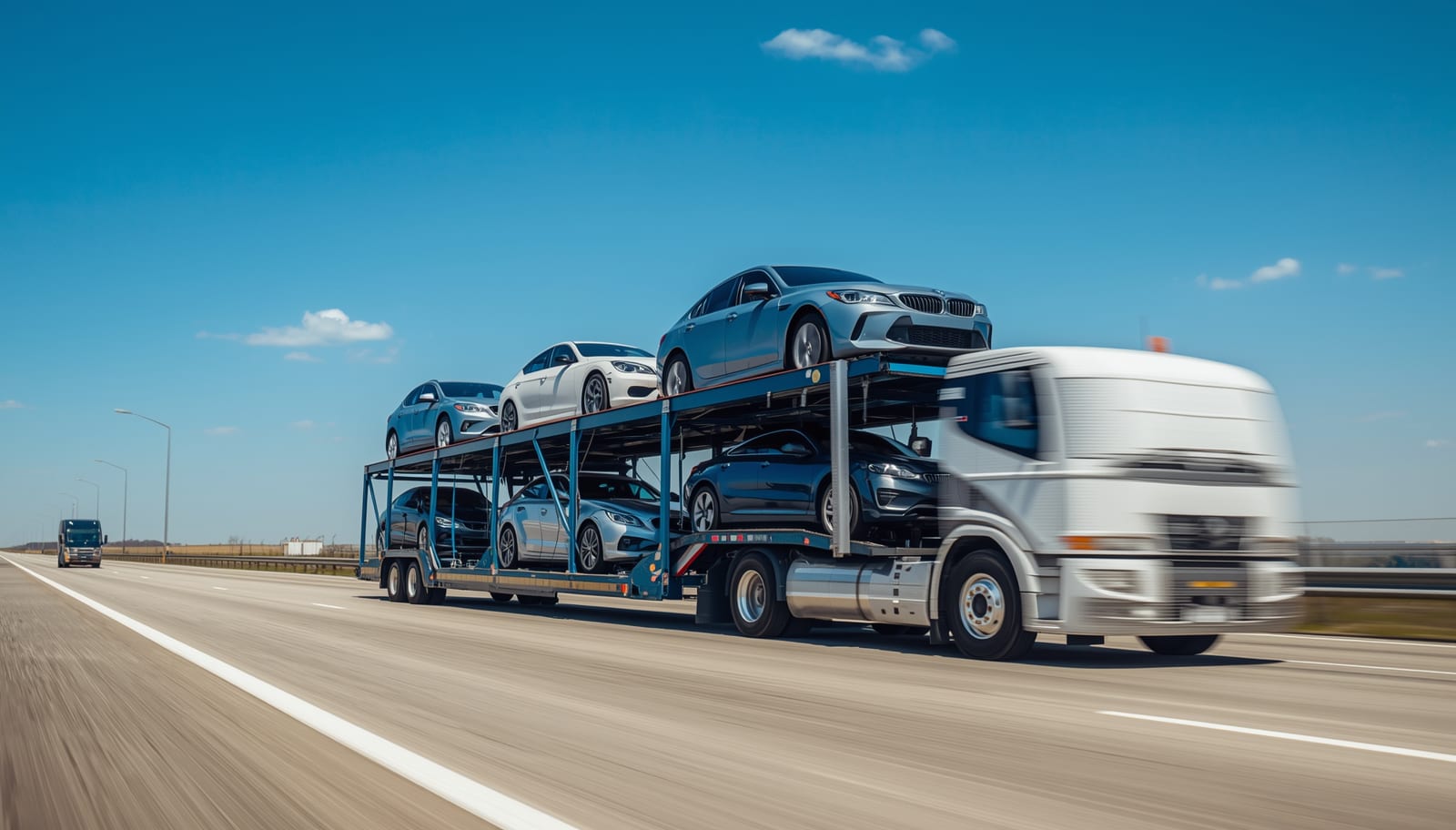
Open car transport is the standard choice. It's how most vehicles in the U.S. are shipped, including new cars headed to dealerships. Larger SUVs and pickups cost a bit more because they take more space — see why SUVs and trucks cost more to ship.
Electric Vehicles
EVs can ship on open or enclosed carriers. Charge to about 30–50%, set transport or tow mode, and turn off sentry features. Heavier EVs can carry a small surcharge. Read EV shipping and battery safety and Tesla shipping cost.
Want your actual price? Request a free quote in 60 seconds — no payment, no spam.
Get My Free Quote →Classic, Luxury and Exotic Cars
Choose enclosed transport, often with a lift gate for low cars and soft tie-downs. Get your insurance and documentation in order first — see classic car insurance and shipping. Related services: classic car shipping, luxury car shipping and exotic car transport. Show-bound? Read collector and show car transport.
Motorcycles
Motorcycles need wheel chocks and soft straps, and many carriers use enclosed trailers or dedicated bike setups. Lower the fuel to a quarter tank and fix any leaks. Full checklist: how to prepare a motorcycle for shipping.
Non-Running Vehicles
Non-runners ship regularly on winch-equipped carriers. Tell us whether the vehicle rolls, steers and brakes — it changes the equipment needed. Not mentioning it is the most common cause of price changes at pickup. See inoperable vehicle transport.
Lifted and Modified Trucks
Measure the truck as it sits today, including lights, racks and tires. Taller trucks need low-deck positions or specialty trailers, and extreme builds may need permits. Read shipping a lifted or modified truck and oversize vehicle permits.
Want your actual price? Request a free quote in 60 seconds — no payment, no spam.
Get My Free Quote →Prep Steps That Apply to Every Vehicle
- About a quarter tank of fuel (or 30–50% charge for EVs)
- Personal items removed or kept to the carrier's limit
- Photos of every side on pickup day
- Existing damage noted on the Bill of Lading
- Toll tags removed and alarms disabled
Quick Comparison by Vehicle Type
- Sedans and crossovers: Open transport, baseline price.
- Full-size SUVs and pickups: Open transport, small surcharge for size.
- EVs: Open or enclosed, charge to 30–50%, possible weight surcharge.
- Classic, luxury and exotic: Enclosed, often with lift gate.
- Motorcycles: Wheel chocks and soft straps, often enclosed.
- Non-runners: Winch-equipped carrier, extra charge.
- Lifted trucks: Lower-deck or specialty trailer, surcharge.
- Heavy equipment, RVs and boats: Flatbed, lowboy or specialty trailers.
Commercial and Specialty Vehicles
ShipMyCar US also moves vehicles most people don't think of as "cars":
- Bus shipping and food truck shipping
- Ambulance shipping
- RV transport and fifth wheel transport
- Boat shipping
- Tractor transport and forklift transport
- Cargo van transport
Each needs specific equipment, so share dimensions and condition at booking.
Getting an Accurate Quote for Any Vehicle
The more precise your details, the more accurate your price. Include the year, make, model and trim, any modifications, whether it runs, and your exact pickup and delivery addresses. Use the car shipping calculator or call 1-888-706-8784.
A Simple Decision Matrix
Answer four questions and you'll know which service fits:
1. Is the vehicle worth more than about $50,000–$75,000, or is it collectible? Yes → enclosed transport. No → open transport is usually fine.
2. Does it run, steer and brake? No → you need a winch-equipped carrier. Tell us exactly what works.
3. Is it unusually tall, low, long, wide or heavy? Tall or long → lower-deck position or specialty trailer. Very low → lift gate. Very wide or heavy → flatbed, step-deck or lowboy, maybe with permits.
4. Is timing critical? Yes → expedited service. No → a flexible pickup window gets a better price.
Most vehicles end up at "open, door-to-door, standard timing," which is the most affordable option.
Open vs. Enclosed by Vehicle Type
- Daily drivers, leases and commuter cars: Open.
- New cars from dealers: Open is standard; enclosed for luxury models if you want showroom condition.
- Classic and vintage cars: Enclosed, usually with soft straps.
- Exotics and supercars: Enclosed with a lift gate.
- High-end EVs: Often enclosed; mainstream EVs ship open.
- Motorcycles: Enclosed or dedicated motorcycle carriers.
- Pickups and SUVs: Open in most cases.
- Project cars and non-runners: Open with a winch, or enclosed for valuable projects.
Enclosed typically costs about 30–40% more. Read open vs. enclosed car transport.
Weight and Battery Requirements at a Glance
- Gas vehicles: About a quarter tank of fuel.
- EVs: About 30–50% charge for domestic ground transport, with transport or tow mode set.
- Plug-in hybrids: Treat like EVs for charge level; keep a quarter tank of fuel too.
- Diesel trucks: About a quarter tank; heavy-duty models may carry a weight surcharge.
- Motorcycles: A quarter tank or less, and no fuel leaks.
- Boats and RVs: Drain water tanks; turn off propane; follow carrier fuel limits.
Documents by Vehicle Type
- Standard domestic shipments: Photo ID and keys; registration or title if the carrier asks for proof of ownership.
- Classic and collector cars: Appraisal, photos and insurance details. See classic car insurance and shipping.
- Auction vehicles: Release or gate pass. See the auction pickup guide.
- Inherited vehicles: Proof of authority to release. See shipping a deceased loved one's car.
- Hawaii, Alaska and international: Title or registration, ID, and lienholder letter if financed.
Common Mistakes by Vehicle Type
- Lifted trucks: Quoting the factory height instead of the real height.
- EVs: Shipping at 100% charge or leaving Sentry-style modes on.
- Exotics: Not mentioning low ground clearance.
- Non-runners: Saying "it runs sometimes."
- Motorcycles: Accepting handlebar-only tie-downs.
- Classics: Assuming your classic policy covers transport without checking.
Each one leads to delays, damage risk or a price change at pickup.
Special Cases
- Vehicles without keys: Possible in some cases, but steering may lock. Tell us at booking.
- Vehicles with no title yet: Often fine domestically with a bill of sale. See can I ship a car without a title.
- Leased cars: Domestic shipping is usually fine; check your lease for any restrictions.
- Salvage and flood vehicles: Winch loading and, sometimes, extra cleaning. See salvage car FAQ.
RVs, Boats and Equipment
Some vehicles don't fit on a car carrier at all:
- Motorhomes usually move by driveaway or on a heavy-haul trailer. See RV transport.
- Travel trailers and fifth wheels are towed by drivers with properly equipped trucks. See trailer transport.
- Boats ride on hydraulic boat trailers, with permits if the beam is over 8'6". See boat shipping.
- Tractors and construction equipment need flatbeds, step-decks or lowboys. See heavy equipment shipping.
- Buses, ambulances and food trucks usually move by driveaway, tow or lowboy. See bus shipping.
Each of these is quoted on exact dimensions, weight and condition.
How to Request an Accurate Quote for Any Vehicle
Include these details and your quote will be right the first time:
- Year, make, model and trim
- Running condition: runs, rolls, steers, brakes
- Modifications: lift, lowering, tires, racks, body kits
- Exact pickup and delivery ZIP codes
- First available pickup date and how flexible you are
- Open or enclosed preference
- Any special needs: low clearance, non-standard keys, missing parts
Frequently Asked Questions
What type of transport does my vehicle need?: Open transport suits most standard vehicles. Enclosed is the better choice for classic, exotic, luxury and other high-value vehicles.
How much more does enclosed transport cost than open?: Typically about 30–40% more on the same route.
Can I ship a car that doesn't run?: Yes. Tell us at booking whether it rolls, steers and brakes so the right equipment is assigned.
What if my vehicle has a lift kit or body modifications?: Declare all modifications and current measurements at booking so the carrier can plan the right trailer position.
Do I need enclosed transport for a new car?: Not usually. Most new cars reach dealerships on open carriers. Enclosed is optional for luxury models.
Can a car with no keys be shipped?: Sometimes, but it's harder to steer and load. Tell us at booking so the carrier can plan.
What's the best way to ship a project car?: Open transport with a winch for most projects, or enclosed for valuable restorations.
Can you ship a vehicle with aftermarket body kits?: Yes. Body kits and low splitters often need a lift gate or extra ramps, so mention them at booking.
Do you ship golf carts and UTVs?: Yes. Smaller vehicles often ship on flatbeds or alongside cars when space allows.
Can I ship two different vehicle types together?: Yes. For example, a car and a motorcycle, or a car and an SUV, can often travel on the same booking.
Source: every broker and carrier's operating authority, safety rating, and insurance status is public record — verify any company for free at the FMCSA SAFER System.
Related Articles
How to Prepare Your Car for Shipping: The Complete 2026 Checklist