When you start getting car shipping quotes, you will be asked to choose between open and enclosed transport. Most people have a vague sense that enclosed sounds safer — but the reality is more nuanced than that. Open transport is how the vast majority of vehicles in the United States are shipped, including brand-new cars from manufacturers to dealerships. Enclosed transport serves a specific purpose and carries a meaningful price premium.
This guide gives you an honest, practical comparison so you can make the right call for your specific vehicle and situation — without overpaying for a service you do not need, or underpaying for a service your vehicle genuinely requires.
What Is Open Car Transport?
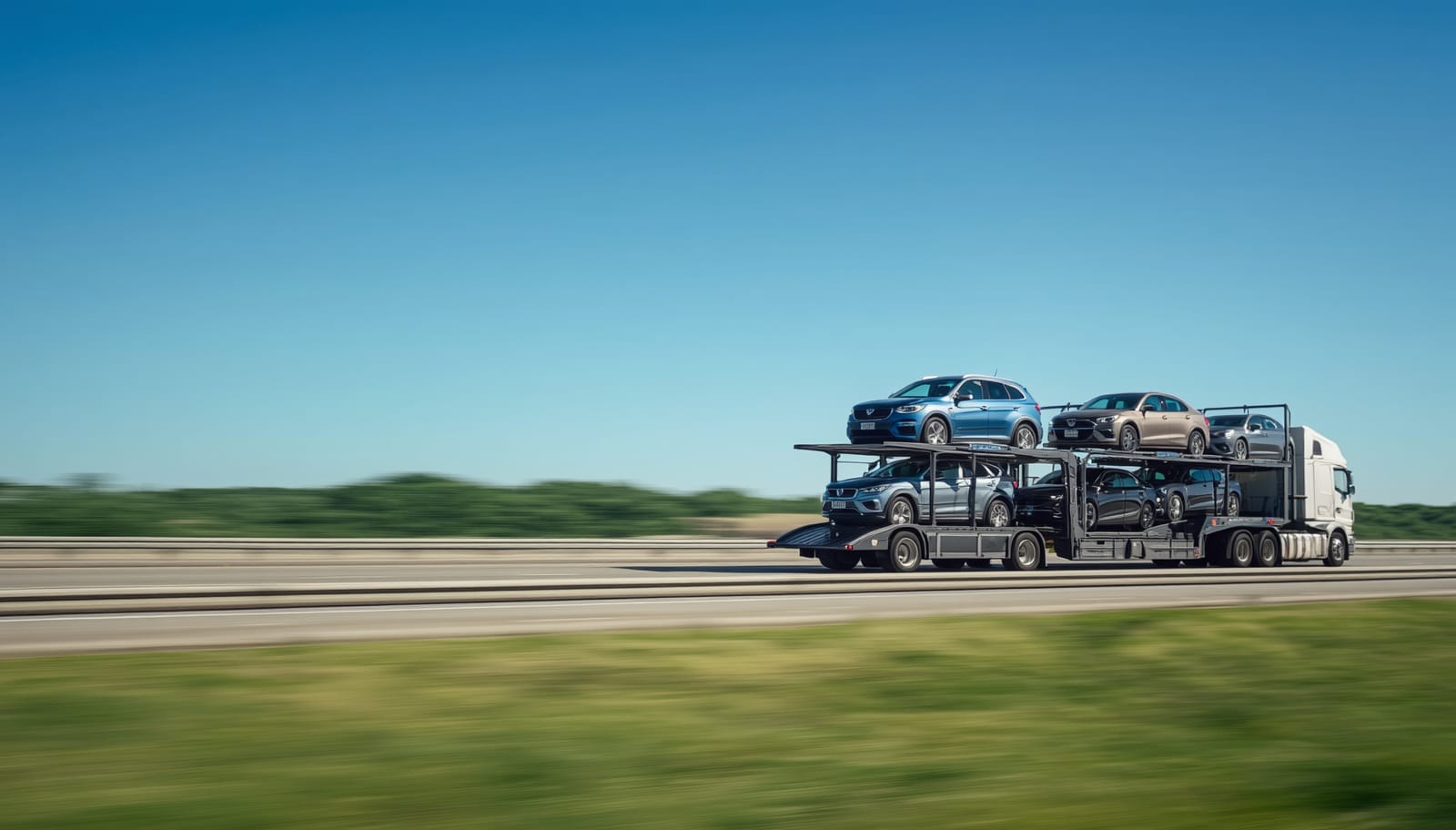
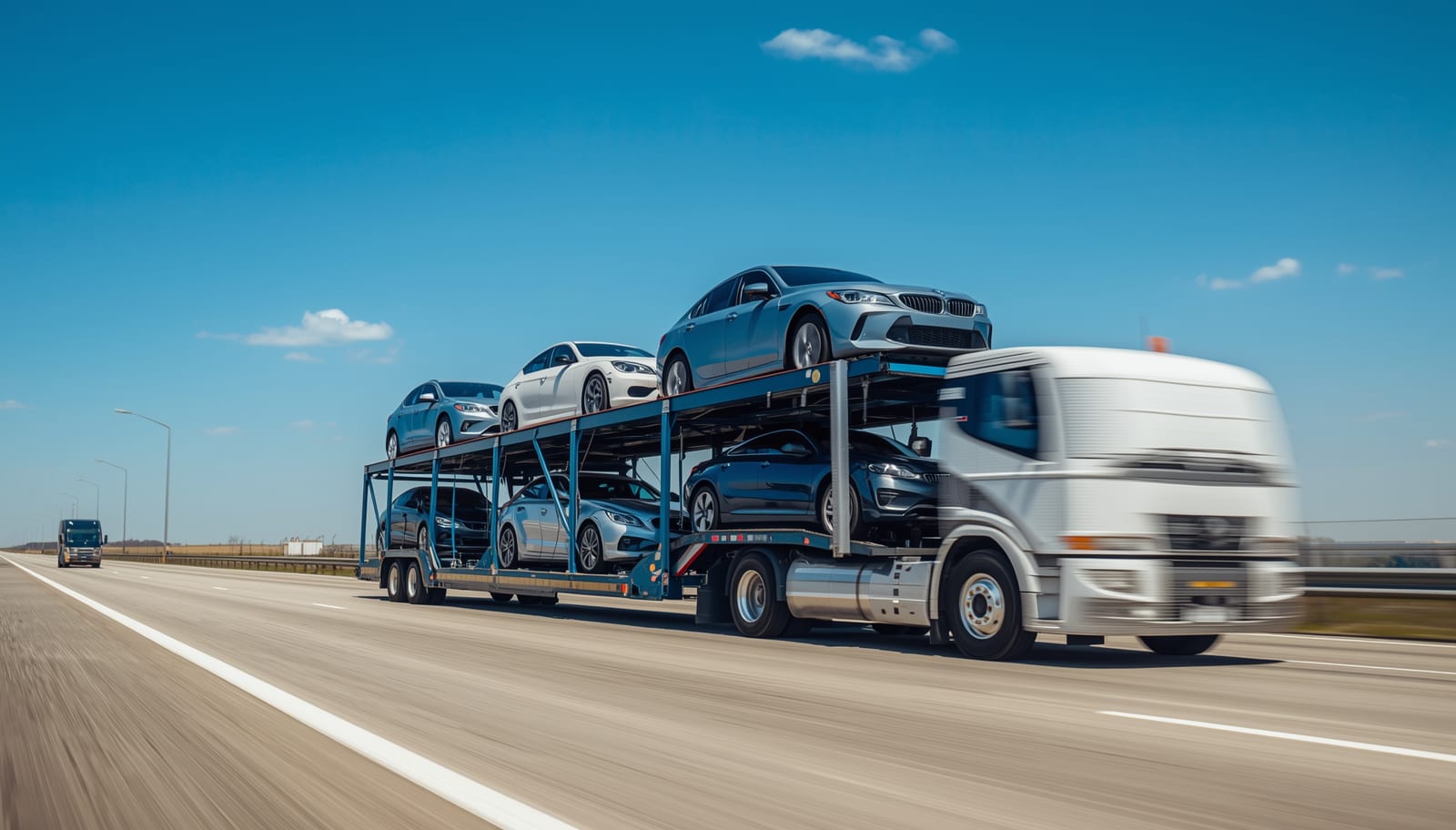
Open car transport uses multi-level trailers that hold 7 to 10 vehicles simultaneously. These are the large car haulers you see regularly on US interstates, loaded with a mix of sedans, SUVs, and trucks arranged on two levels. Your vehicle is driven onto the trailer, secured to the deck with heavy-duty straps at the axle or frame points, and transported to its destination on the open trailer — exposed to air, weather, and road conditions throughout.
Open transport accounts for the overwhelming majority of all auto transport in the United States — industry estimates put it at 90% or more of total shipments. It is the method used to move new vehicles from factories to dealerships. It is the method used by the military for non-combat vehicle transport. It is the method most commonly used by individuals, families, dealerships, and fleet managers shipping vehicles across the country.
Why is it safe despite being 'open'?: Your vehicle is not simply placed on a trailer and left loose. Carriers use industrial-grade straps and wheel nets that secure the vehicle at four points — preventing any movement during transit. The vehicle's paint is not directly touched by the straps. The carrier driver conducts a thorough pre-load inspection and documents the vehicle's condition on the Bill of Lading before departure.
Open transport is appropriate for: standard sedans, crossovers, SUVs, pickup trucks, minivans, and essentially any vehicle that you drive on public roads daily. It is safe, widely available, and significantly more affordable than enclosed.
What Is Enclosed Car Transport?
Enclosed transport uses a fully covered trailer — either a hard-sided metal box or a soft-sided covered trailer — that completely protects vehicles from weather, road debris, UV exposure, and external elements during transit. Enclosed trailers typically carry 3 to 7 vehicles depending on trailer size and configuration.
Some enclosed trailers are designed specifically for high-value vehicles and include features like hydraulic lift gates (eliminating the risk of low-clearance vehicles dragging on loading ramps), soft-tie systems that secure vehicles without contacting the wheels or frame, and interior lighting for inspection. These trailers are what auction houses, exotic car dealerships, and serious collectors use for their most valuable vehicles.
The cost premium: Enclosed transport costs 30–40% more than open transport on the same route. The premium exists because enclosed trailers carry fewer vehicles (lower revenue per trip) and cost significantly more to operate and maintain than open carriers. For a New York to California route that costs $1,200 open, enclosed typically runs $1,600–$1,800.
Availability: Enclosed carriers are less common than open carriers, particularly on lower-volume routes. On high-demand corridors — California, Florida, Texas, New York — enclosed availability is strong. On remote or rural routes, enclosed carrier lead times may be 3–7 days longer than open.
The Real Cost Difference by Route
To make the comparison concrete, here are realistic 2026 price comparisons on major routes:
Los Angeles to New York: Open $1,100–$1,600 / Enclosed $1,550–$2,200 Texas to Florida: Open $750–$1,100 / Enclosed $1,050–$1,550 Chicago to Los Angeles: Open $900–$1,300 / Enclosed $1,250–$1,800 Atlanta to New York: Open $650–$950 / Enclosed $900–$1,350 Seattle to Los Angeles: Open $700–$1,100 / Enclosed $980–$1,550
On a cross-country move, you are looking at a premium of $400–$700 for enclosed transport. That premium makes sense for a $150,000 Ferrari. It may or may not make sense for a $35,000 SUV, depending on your risk tolerance and the vehicle's condition.
Who Should Choose Open Transport
Open transport is the right choice for the vast majority of vehicle shipments. You should choose open if:
Your vehicle is a daily driver — a standard sedan, crossover, SUV, or pickup truck that you drive on open roads in rain, sun, and all weather conditions already. A vehicle that lives outside is not harmed by an open carrier crossing.
Your vehicle is worth less than $60,000–$80,000. Below this threshold, the cost of enclosed transport is rarely justified by the marginal additional protection it provides, particularly on shorter routes where transit time is measured in days rather than a week or more.
You are shipping during spring or fall when desert heat and UV intensity are at moderate levels.
You are cost-conscious and need to allocate moving budget efficiently. The $400–$700 saved on open transport versus enclosed can be applied to other relocation costs.
You are shipping a newer vehicle that is still under manufacturer warranty — paint and mechanical issues discovered during transport are covered by cargo insurance regardless of carrier type.
Who Should Choose Enclosed Transport
Enclosed transport is the right choice in specific circumstances where the vehicle's value, condition, or sensitivity justifies the additional cost:
Luxury and exotic vehicles: Ferrari, Lamborghini, McLaren, Porsche 911 GT3, Bentley, Rolls-Royce, high-spec AMG Mercedes, BMW M cars. The cost of a single insurance claim or paint correction on these vehicles vastly exceeds the enclosed transport premium.
Classic and collector cars: Show-quality restored classics, numbers-matching originals, and collector vehicles with high sentimental or market value should always ship enclosed. A single chip from road debris on a concours-quality paint job can require thousands in restoration.
Low-clearance vehicles: Sports cars with very low ground clearance — Corvette, Viper, Lotus Elise, most track-focused vehicles — risk contact with standard loading ramps on open carriers. Enclosed carriers with hydraulic lift gates eliminate this risk entirely.
Freshly detailed or show-prepped vehicles: If your car has just been detailed, polished, and prepped for a show or auction, open carrier road spray undermines that preparation. Ship enclosed, arrive show-ready.
Summer desert crossings: For sensitive vehicles crossing the Nevada or Arizona desert in July and August where temperatures reach 115°F — enclosed transport eliminates UV exposure and heat buildup concerns for rubber seals, convertible tops, and interiors.
Common Myths About Open Transport
Myth: Open carriers leave your car exposed to damage from other vehicles: The strapping and positioning on open carriers is designed specifically to prevent contact between vehicles. Scratches from adjacent cars on a properly loaded open carrier are extremely rare.
Myth: Open transport is not insured: Every carrier in the ShipMyCar US network — open or enclosed — carries cargo insurance. Standard minimum is $100,000; most long-haul carriers carry $250,000–$500,000. Damage caused by the carrier during transit is covered under this insurance regardless of whether you used open or enclosed service.
Myth: Enclosed is always worth the premium: For a 10-year-old Honda Accord being shipped from New York to Florida, enclosed transport adds $400 of premium to protect a vehicle worth $12,000. The math rarely makes sense for everyday vehicles.
The bottom line: choose based on your vehicle's value, condition, and sensitivity — not on anxiety about open carriers. Open transport is the industry standard for a reason. If you are still unsure, ask your ShipMyCar US coordinator — they will give you a straight answer based on your specific vehicle and route, not a sales pitch for the more expensive option.
Source: every broker and carrier's operating authority, safety rating, and insurance status is public record — verify any company for free at the FMCSA SAFER System.
Related Articles
How Much Does It Cost to Ship a Car in 2026?
How to Prepare Your Car for Shipping: The Complete 2026 Checklist