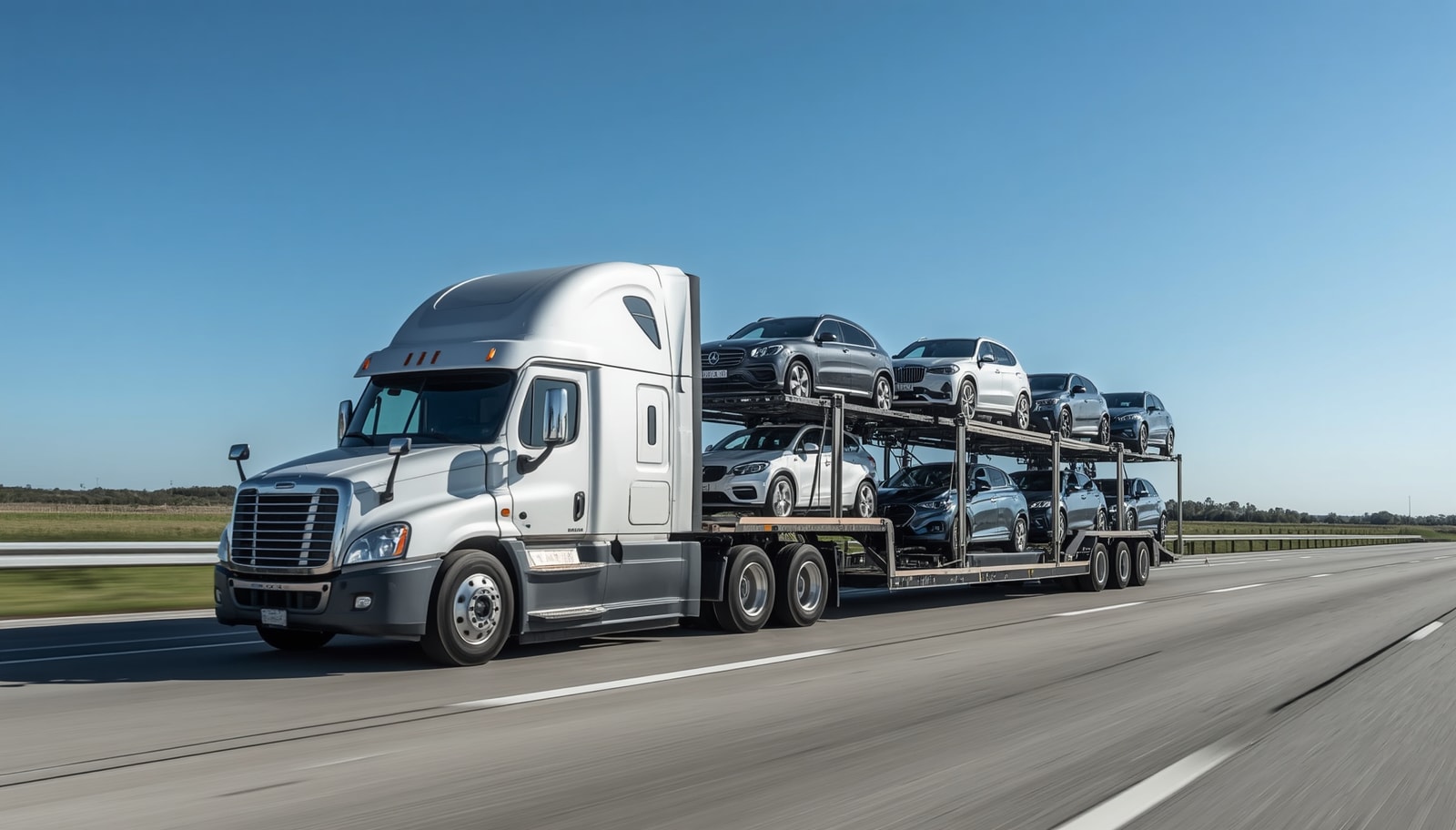
Shipping an electric vehicle is mostly the same as shipping a gas car — a licensed carrier, an inspection, a Bill of Lading. But a few things are different: how much charge to leave in the battery, how the extra weight affects the truck, and the settings that can quietly drain the car while it's on the trailer.
This guide covers those differences and gives you a simple prep checklist.
Free car shipping quote
What will it cost to ship your car?
Get Your Free Quote
Free quote in 60 seconds · We never sell your info
Why EV Transport Is Different
- Weight: Battery packs make EVs heavier than comparable gas vehicles, sometimes by 1,000 pounds or more on trucks and large SUVs.
- Battery charge: There's an ideal range for shipping — not full and not empty.
- Software: Sentry modes, climate preconditioning and phone-as-key features can cause problems if they're left on.
- Carrier know-how: The driver needs to know how to put the car in transport or tow mode.
State of Charge: Domestic vs. International
Domestic ground transport: Aim for about 30–50% charge at pickup. Enough for the driver to load, unload and move the car a short distance, without carrying a full battery.
International ocean or air shipping: Rules are stricter. Carriers often require a low state of charge — commonly 30% or less — and the vehicle may be classed as dangerous goods (UN 3556 for battery-powered vehicles). Your shipping line will tell you its exact limit. See international car shipping.
Hawaii and Alaska: Some ocean carriers restrict EVs entirely. Read shipping a car to Hawaii or Alaska.
Why EVs Can Cost a Little More to Ship
A car carrier has a legal weight limit. Heavier EVs use up more of it, which can mean fewer vehicles on the truck. On a fully loaded trailer, that can add roughly $100–$300 compared with a similar gas car on the same route. On lighter loads, there may be no difference at all.
For the full explanation, read EV weight and carrier capacity. For Tesla prices by model, see Tesla shipping cost.
Want your actual price? Request a free quote in 60 seconds — no payment, no spam.
Get My Free Quote →Does the Carrier Need Special Certification?
For domestic ground transport, no special hazardous-materials certification is required. Any licensed, insured auto carrier can move an EV. What matters is experience: knowing how to engage tow or transport mode, which tie-down points to use, and never strapping over the battery pack or underbody.
8-Step EV Prep Checklist
- Charge to about 30–50% the day before pickup.
- Turn on transport or tow mode (for Teslas, check under Service Mode).
- Turn off Sentry Mode or similar camera-monitoring features.
- Turn off scheduled climate preconditioning.
- Pause automatic software updates.
- Provide a physical key card or fob.
- Photograph the battery percentage at pickup.
- Leave printed instructions in the car for putting it in neutral or tow mode.
Open or Enclosed for an EV?
For most mainstream EVs — Tesla Model 3 and Y, Chevrolet Bolt, Nissan Leaf, Ford Mustang Mach-E, Hyundai Ioniq — open transport is fine. Consider enclosed transport for high-end EVs like a Lucid Air, Porsche Taycan, Rivian with a wrap, or anything with fresh paint protection film.
ShipMyCar US moves EVs nationwide — see our electric vehicle shipping service.
Brand-Specific Tips
Tesla: Turn on Transport or Tow Mode, turn off Sentry Mode, and leave a key card. See Tesla shipping cost.
Ford Mustang Mach-E and F-150 Lightning: Have the key fob and know how to put the vehicle in neutral; check your owner's manual for tow or transport instructions.
Rivian: Provide a key fob or card and confirm the transport mode steps for your software version.
Chevrolet, Hyundai, Kia and Nissan EVs: Make sure the 12V battery is healthy, because a weak 12V battery can stop the car from shifting into neutral.
When in doubt, leave printed instructions in the car for the driver.
Want your actual price? Request a free quote in 60 seconds — no payment, no spam.
Get My Free Quote →Shipping an EV in Winter or Summer Heat
Cold weather lowers usable battery range and can drain charge faster, so leave a little more than usual — around 40–50%. In extreme heat, don't leave the car fully charged; stay within the 30–50% range. In either season, a healthy 12V battery matters most, because it powers the systems the driver needs to load and unload the car.
After Delivery
Check the battery percentage against your pickup photo, look for any warning messages, and turn Sentry or monitoring modes back on. Charge the car before a long drive. If anything seems wrong, note it on the Bill of Lading before signing.
Why Not Ship at 100% or 0%?
A full battery isn't necessary for loading and unloading, and keeping a lithium-ion battery at a moderate charge is generally gentler on it during a period of sitting. A nearly empty battery is the opposite problem: if the car sits longer than expected, or a sentry or alarm system draws power, the high-voltage battery or the 12V system can drop low enough that the car won't wake up or shift into neutral. A moderate charge gives the driver enough range to move the car on and off the trailer and some margin for delays.
International Shipping and UN 3556
For ocean and air freight, battery-powered vehicles are regulated as dangerous goods. Under the UN numbering system, battery-electric vehicles are classified as UN 3556 (vehicle, lithium-ion battery powered). That classification brings specific rules for documentation, charge level and handling. Shipping lines often set their own state-of-charge limits for EVs, commonly 30% or less, and some routes restrict EVs entirely. A freight forwarder will tell you the exact requirements. See international car shipping.
The Weight Math Behind EV Pricing
EV battery packs commonly weigh roughly 1,000 to 2,000 pounds or more, depending on size. That puts many EVs several hundred to a thousand-plus pounds heavier than comparable gas vehicles. Because car carriers are limited by total weight as well as deck space, a load with several heavy EVs can max out before the deck is full. That's why some carriers add a modest surcharge for heavier EVs on full loads. Read EV weight and carrier capacity.
The 12V Battery: The Most Common EV Shipping Problem
Most EVs still rely on a small 12V battery to power the computers, locks and gear selector. If the 12V battery dies, the car may not unlock, turn on or shift into neutral — even with a healthy main battery. Sentry modes, alarms and app connections can drain it while the car sits on a trailer. Before shipping:
- Make sure the 12V battery is healthy, especially on older EVs.
- Turn off camera monitoring and scheduled features.
- Leave instructions for jump-starting the 12V if needed.
Insurance and Documentation for EVs
EVs can be expensive to repair, particularly the battery and underbody. Ask for the carrier's insurance certificate if your EV is high value, photograph the car including the underbody edges, and record the charge level at pickup. Note any warning messages present before shipping so they aren't mistaken for transport damage.
Choosing a Carrier With EV Experience
Ask whether the carrier regularly moves EVs, how they put them in transport mode, and where they attach tie-downs. Experienced drivers know to avoid strapping over battery packs and to use manufacturer-recommended points. They'll also know common brand-specific quirks, like keeping a key card handy for a Tesla or a fob near the start button for other brands.
Open or Enclosed: An EV-Specific Look
EVs don't need enclosed transport for safety — battery systems aren't affected by riding on an open trailer. The choice comes down to value and finish. Glass roofs, matte wraps, paint protection film and large, expensive wheels are the main reasons EV owners choose enclosed. For mainstream EVs with standard paint, open transport is the practical, affordable choice.
The Short Version
Charge to about 30–50%, set transport or tow mode, turn off sentry and scheduled features, keep the 12V battery healthy, leave a key card or fob, and photograph the battery level at pickup. For ocean or international shipping, follow the shipping line's charge limits and confirm the vehicle will be accepted.
Frequently Asked Questions
What charge should my EV have for shipping?: For domestic ground transport, about 30–50%. International shipping often requires a lower charge, so check with the shipping line.
Why does shipping an EV cost more?: EVs are heavier, and on a fully loaded truck that extra weight can mean fewer vehicles fit, which can raise the price slightly.
Does my carrier need dangerous goods certification for an EV?: Not for domestic ground transport. Any licensed carrier can move an EV, though experience with EVs matters.
Should I disable Sentry Mode before shipping?: Yes. Leaving it on can drain the 12V battery and trigger alerts during transport.
Can an EV be shipped if it's low on charge?: Yes, but very low charge risks the car not powering on. Charge to about 30–50% if you can.
Do EVs need special trailers?: No. Standard open and enclosed carriers move EVs every day, with attention to weight and tie-down points.
Is it safe to ship an EV with a damaged battery?: Damaged batteries need special handling and may be restricted. Tell us at booking so we can confirm options.
Will the carrier charge my EV during transport?: No. Carriers don't charge vehicles in transit, which is why starting with a moderate charge matters.
Do EVs need a special inspection before shipping?: No special inspection is required, but photograph the battery level and any warning messages at pickup.
Can a plug-in hybrid ship like a regular car?: On trucks, yes — keep a moderate charge and about a quarter tank. Some ocean carriers treat plug-in hybrids like EVs.
Should I unplug my EV's charging cable before shipping?: Yes. Remove the cable from the car and keep the mobile connector with you, or pack it securely if the carrier allows it.
Source: every broker and carrier's operating authority, safety rating, and insurance status is public record — verify any company for free at the FMCSA SAFER System.
Related Articles
How Much Does It Cost to Ship a Tesla? Model 3, Y, S, X and Cybertruck
EV Weight and Car Carrier Capacity: Why Electric Cars Can Cost More to Ship