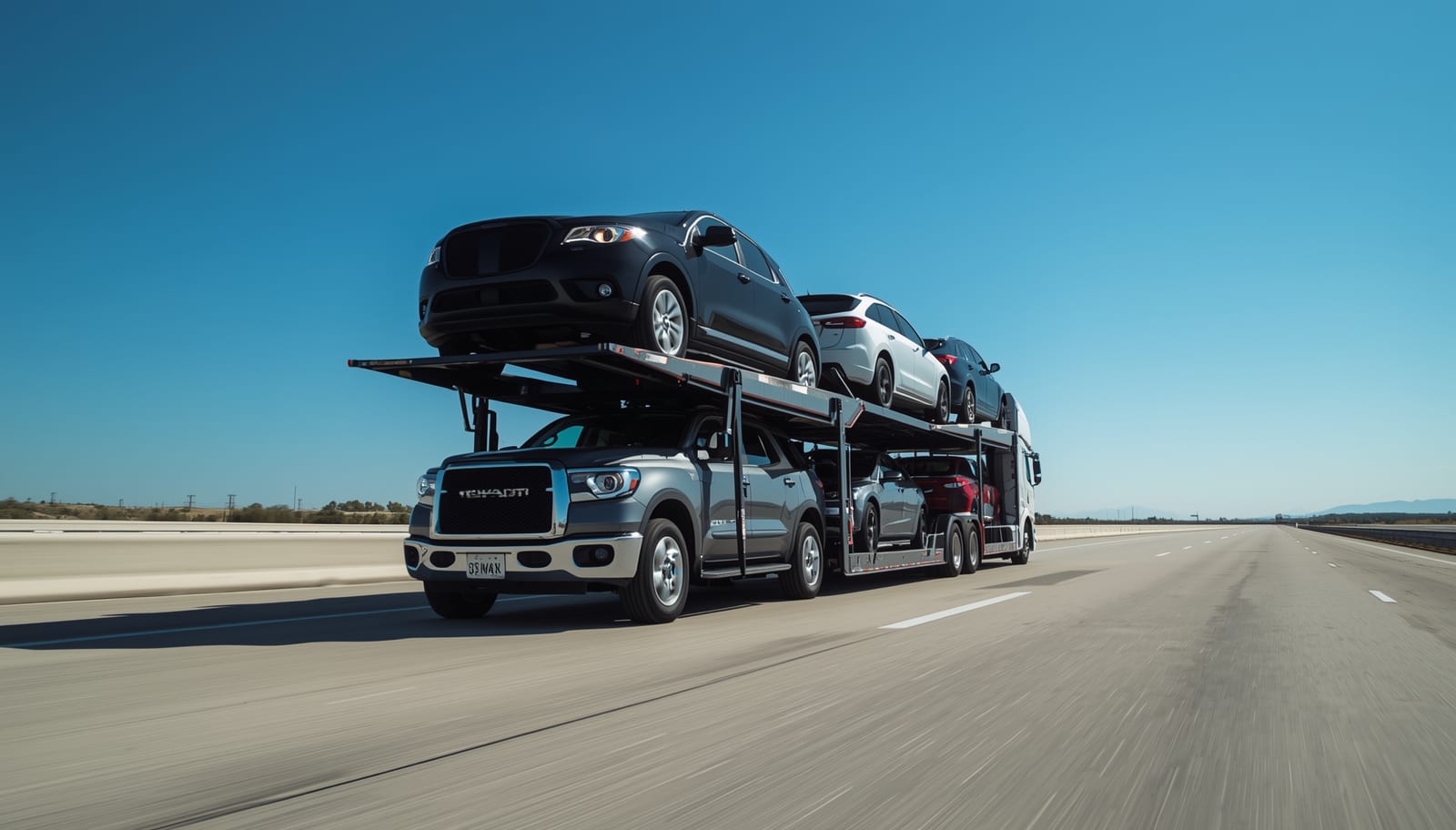
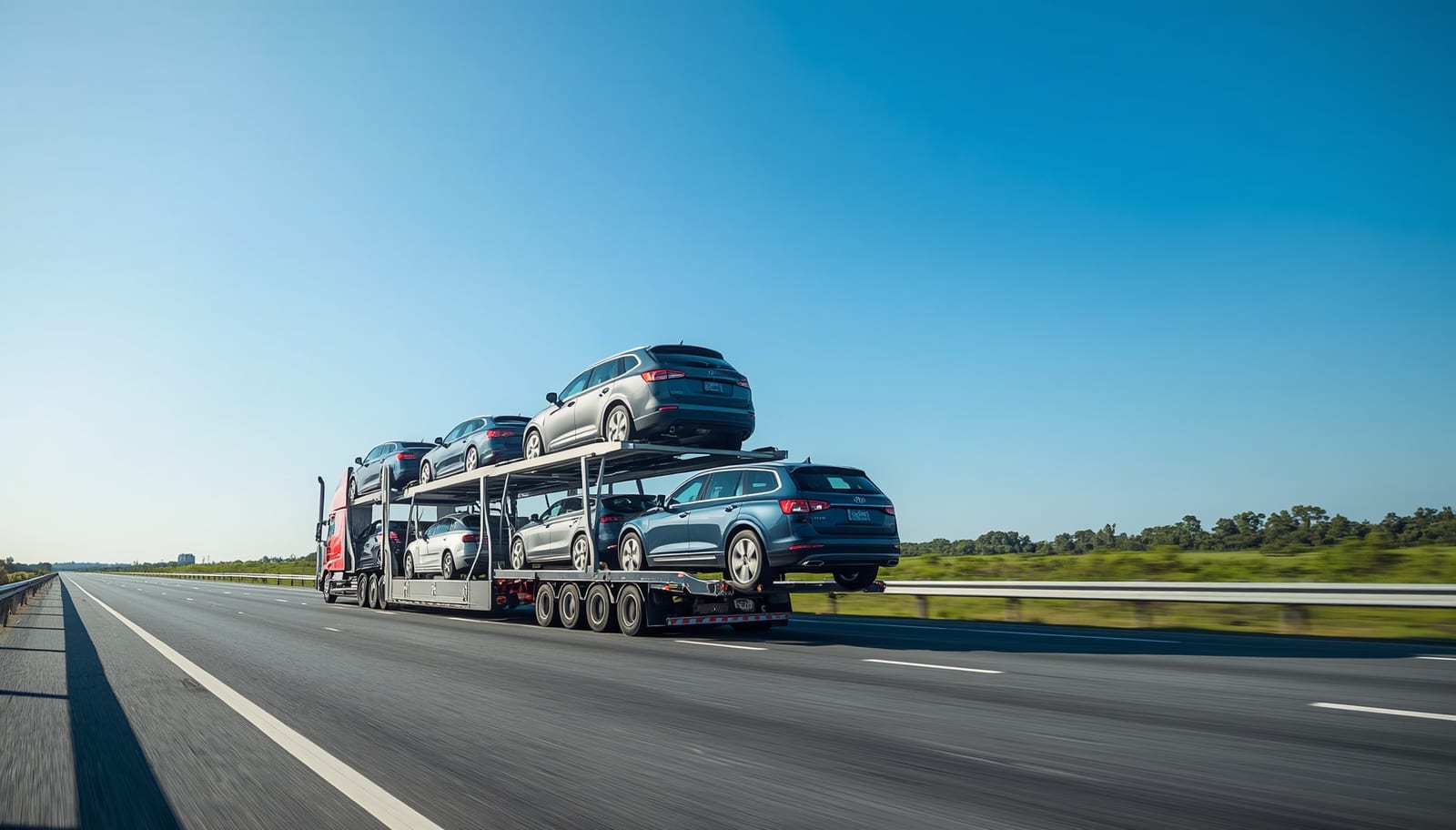
Ask two neighbors in different states what they paid to ship a car the same distance, and you'll often get very different answers. That's not random. The biggest reason car shipping rates vary by state isn't mileage — it's carrier density: how many trucks are competing for loads in and around that state.
States with lots of carriers keep prices low and pickups fast. States with few carriers have higher quotes and longer waits, even on shorter trips. A California-to-New York shipment can cost less per mile than a Montana-to-Georgia shipment, simply because California has many times more trucks looking for loads.
This guide explains how carrier density works, groups the states into five pricing tiers, and lists the factors that move your state's rate up or down.
Free car shipping quote
What will it cost to ship your car?
Get Your Free Quote
Free quote in 60 seconds · We never sell your info
What Carrier Density Means for Your Price
Auto transport runs on load boards. Brokers post vehicles with a carrier pay rate, and carriers pick the loads that fit their route. Prices come from supply and demand on each lane.
When many trucks pass through a state, competition keeps rates down and pickup windows short — often one to three days. When few trucks pass through, a carrier may have to drive empty miles to reach your car or leave without a return load. That risk is priced into your quote.
Three things shape a state's carrier density:
- Interstate access: States on major corridors like I-5, I-10, I-40, I-75, I-80 and I-95 see steady truck traffic.
- Population and shipping volume: Big states with constant relocation, dealer and auction traffic keep lanes busy year-round.
- Backhaul options: A carrier delivering into a state needs another load to leave with. States where loads flow both ways are cheaper.
The Five Car Shipping Price Tiers by State
These tiers describe typical carrier availability for a standard sedan on an open carrier. Your exact rate still depends on distance, season and vehicle.
Tier 1 — Major hubs (lowest rates, fastest pickup): California, Texas, Florida, Georgia, Illinois and Arizona. Constant two-way traffic on the busiest interstates.
Tier 2 — Strong corridors: New York, New Jersey, Pennsylvania, Ohio, North Carolina, Tennessee, Virginia, Nevada, Colorado and Michigan.
Tier 3 — Regional markets: States such as Washington, Oregon, Missouri, Indiana, Alabama, South Carolina, Louisiana, Oklahoma, Minnesota and Utah. Good coverage near metro areas, slower in rural counties.
Tier 4 — Thin coverage: Vermont, Maine, New Hampshire, North Dakota, South Dakota, Idaho and West Virginia. Fewer trucks and fewer return loads.
Tier 5 — Remote or ocean-dependent (highest rates): Montana, Wyoming, Alaska and Hawaii. Long empty miles, or a mandatory ocean leg.
What the Tiers Mean in Dollars
For the lower 48, ShipMyCar US typical open-carrier pricing for a standard sedan looks like this:
- Under 500 miles: $400–$750
- 500–1,000 miles: $700–$1,050
- 1,000–1,500 miles: $950–$1,300
- 1,500–2,000 miles: $1,100–$1,500
- Coast to coast: roughly $1,300–$1,800
Routes between two Tier 1 or Tier 2 states usually land at the low end of each band. Routes that start or end in Tier 4 or Tier 5 states usually land at the high end, or slightly above it. Enclosed transport adds about 30–40% at every distance.
Alaska and Hawaii are priced differently because they include ocean freight. See our Hawaii car shipping guide for how that works.
Want your actual price? Request a free quote in 60 seconds — no payment, no spam.
Get My Free Quote →6 Factors That Shift Your State Rate
- Direction of travel: Shipping into Florida in fall is cheaper than shipping out, because carriers are already heading south. Spring reverses it.
- Season: Summer relocations and snowbird months tighten capacity on popular lanes.
- Exact address: A downtown address near an interstate costs less than a ranch 60 miles off the highway in the same state.
- Vehicle size: SUVs, pickups and vans take more trailer space and weight.
- Running condition: Inoperable vehicles need a winch.
- Transport type: Enclosed car transport costs more than open transport everywhere.
How to Save When You're in a Higher-Cost State
- Meet near a highway: Offering a pickup point near a major interstate or a nearby city can cut the price noticeably.
- Be flexible on dates: A wider pickup window lets the broker match you with a carrier already passing through.
- Consider terminal service: Terminal-to-terminal transport can help in rural areas where door-to-door access is difficult.
- Book two to three weeks ahead: Remote lanes need more time to fill. See when to book car shipping.
State Notes: The West
- California: Huge volume in every direction; some of the most competitive rates in the country. See California car shipping.
- Arizona: A Tier 1 hub, with strong snowbird demand in fall and spring. See Arizona car shipping.
- Nevada: Las Vegas and Reno are well served; rural Nevada less so.
- Washington and Oregon: Good I-5 coverage; eastern areas and mountain passes take longer.
- Utah and Colorado: Strong along I-15 and I-25; mountain towns and winter passes add time.
- Idaho, Montana and Wyoming: Thin coverage and long distances push prices up.
- New Mexico: Albuquerque on I-40 and I-25 is well connected; rural areas less so.
State Notes: Texas and the Central States
- Texas: A Tier 1 hub with dense carrier traffic on I-10, I-20, I-35 and I-45. See Texas car shipping.
- Oklahoma, Kansas and Nebraska: Decent on I-35, I-40 and I-80; rural pickups take longer.
- Missouri and Iowa: Central crossroads with good I-70, I-44 and I-80 coverage.
- Minnesota and Wisconsin: Strong snowbird traffic south in fall; winter weather can slow pickups.
- The Dakotas: Among the thinnest coverage in the lower 48.
Want your actual price? Request a free quote in 60 seconds — no payment, no spam.
Get My Free Quote →State Notes: The East and South
- Florida: A Tier 1 destination, with strong seasonal swings. See Florida car shipping.
- Georgia: Atlanta is a major hub on I-75, I-85 and I-20.
- North and South Carolina, Tennessee and Virginia: Strong corridors with steady traffic.
- New York, New Jersey and Pennsylvania: High volume, especially on I-95 and toward Florida.
- New England: Massachusetts and Connecticut are well served; northern New England is thinner.
- Alabama, Mississippi, Louisiana and Arkansas: Good on interstates; rural areas take longer.
- West Virginia and Kentucky: Mountain terrain and fewer through-routes in places.
Alaska and Hawaii
Alaska and Hawaii require ocean freight from the lower 48, which puts them in a different pricing category. From California, Hawaii shipping typically runs about $1,200–$2,200. From the West Coast, Alaska shipping typically starts around $1,800–$2,500. Origins farther east add the cost of trucking to the port. See Hawaii car shipping, Alaska car shipping and shipping a car to Hawaii or Alaska.
How to Use This Guide for Your Quote
- Find the tier for both your pickup and delivery states.
- Use the distance bands for a starting price range.
- Adjust up if either end is rural, in a Tier 4 or 5 state, or in peak season.
- Adjust down if both ends are near interstates in Tier 1 or 2 states and you're flexible on dates.
- Then get an exact quote with the car shipping calculator.
Example Prices by Tier
For a standard sedan on an open carrier, here's how tier affects real routes:
- Tier 1 to Tier 1: Texas to California, about 1,400 miles — typically near the middle of the $950–$1,300 band.
- Tier 1 to Tier 2: Florida to New York, about 1,100–1,250 miles — varies with snowbird season.
- Tier 2 to Tier 3: Pennsylvania to Virginia, a short run with steady traffic.
- Tier 3 to Tier 4 or 5: Routes into Montana, Wyoming or the Dakotas often land at the top of their distance band or above it.
The Short Version
Carrier density, not just distance, sets your price. Busy hub states are cheapest; remote and ocean states cost the most. Use the tiers and distance bands for an estimate, then get an exact quote.
Frequently Asked Questions
Which states have the cheapest car shipping rates?: California, Texas, Florida, Georgia, Illinois and Arizona are generally the cheapest to ship from and to. They sit on the busiest interstates, so trucks rarely run empty and competition keeps rates down.
Which states are the most expensive for car shipping?: Montana, Wyoming, Alaska and Hawaii are usually the most expensive. Sparse populations, long distances and few return loads push rates up in the West, and Alaska and Hawaii require an ocean leg.
Are car shipping rates the same in every state?: No. Two routes of the same length can differ by hundreds of dollars depending on carrier density, direction and season.
Does shipping to or from a state change the price?: Yes. Direction matters. Lanes where carriers are already heading your way are cheaper; lanes where they'd return empty cost more.
Why does shipping from Montana cost more than from Texas?: Fewer carriers, longer distances between pickups and fewer return loads all raise costs in Montana.
Is it cheaper to ship to Florida in the spring?: Usually. Southbound demand peaks in fall and early winter, so spring southbound shipments are often cheaper.
Do state taxes affect car shipping prices?: Not directly. Prices are driven by carrier supply, distance, season and fuel.
Which state is cheapest to ship a car from?: California, Texas and Florida are among the cheapest because of dense carrier traffic in every direction.
Does shipping within the same state cost less?: Short in-state moves cost less in total, though the per-mile rate is higher.
Can I lower my price if I live in a Tier 4 or 5 state?: Yes — meet the driver near a major highway or city, be flexible on dates, and book early.
Source: every broker and carrier's operating authority, safety rating, and insurance status is public record — verify any company for free at the FMCSA SAFER System.