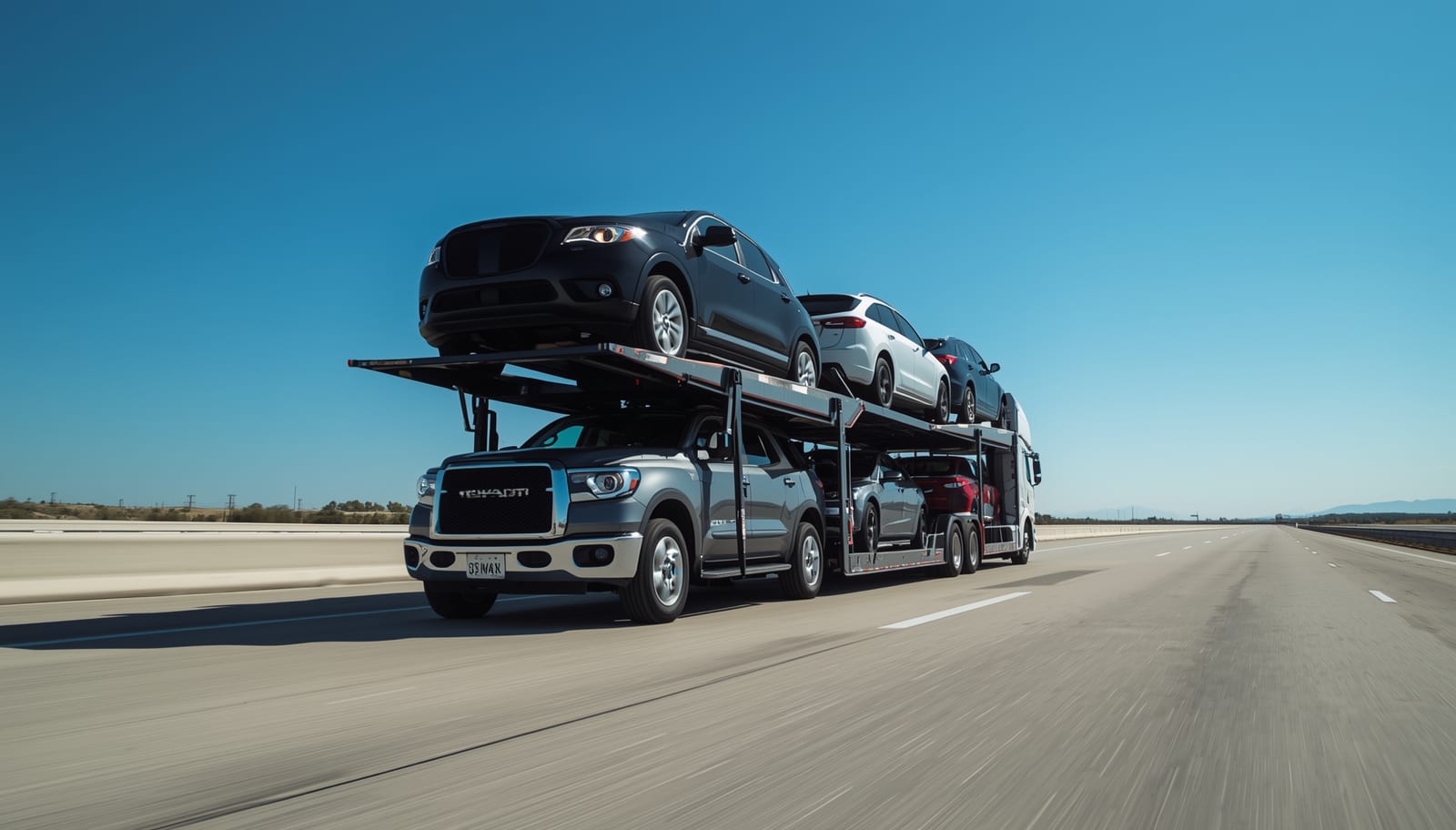
Every car shipping company says "book two to four weeks ahead." What none of them explain is what booking three days out versus three weeks out actually does to your price.
This guide answers that with clear ranges: what last-minute booking costs, how peak season widens the gap, why booking too early can backfire, and the one scheduling move that often saves more than extra lead time.
Free car shipping quote
What will it cost to ship your car?
Get Your Free Quote
Free quote in 60 seconds · We never sell your info
What Lead Time Actually Does to Your Price
For a typical 1,500-mile open-carrier shipment of a sedan in an off-peak month, booking lead time shifts the price roughly like this:
- Pickup within 3 days: Expect a rush premium of about $150–$400 over the standard rate.
- 4–7 days out: Usually $50–$150 above standard.
- 8–14 days out: Close to the standard rate — about $950–$1,300 for this distance.
- 15–21 days out: The best value for most shipments.
- 22+ days out: Little or no extra savings.
The expensive zone is inside seven days. Past two weeks, more lead time helps only a little.
Why Timing Matters in a Spot Market
Car shipping doesn't have airline-style early-bird fares. Prices reflect what carriers will accept when your car is dispatched. Booking earlier helps for a different reason: it gives the broker time to match your car to a truck that's already planning to run your route.
- Carriers plan routes about 7–14 days ahead. Booking inside that window lets your car slot into an existing trip.
- Last-minute bookings break those plans. A carrier has to detour or rearrange loads, and that costs more.
- Carriers value certainty, not endless lead time. A shipment booked two months out is just a guess to a driver who doesn't plan that far.
Peak vs. Off-Peak: When the Gap Widens
- Off-peak (October–November, February–March): Booking three days out costs a modest premium. Rates are forgiving.
- Shoulder months: The gap between last-minute and two-week bookings grows.
- Summer relocation season (May–August): Rush bookings can add $300–$500 on popular lanes.
- Snowbird season: Southbound lanes to Florida, Arizona and Texas tighten from late fall into January; northbound lanes tighten from March to May. See our snowbird auto transport guide.
For a month-by-month view, read the best time of year to ship a car.
Want your actual price? Request a free quote in 60 seconds — no payment, no spam.
Get My Free Quote →The Pickup Window Trick That Beats Lead Time
Your pickup window — the range of dates you'll release the car — can matter more than when you book.
- A one-day hard date forces the broker to find a truck in your area on that exact day, often adding $100–$200.
- A two- to three-day window usually gets the standard rate.
- A five- to seven-day window lets carriers fit your car into routes they've already planned, often saving $50–$200.
The best combination is booking about 14 days ahead with a five-day pickup window. That often comes in $150–$300 below a three-day booking with a fixed date. The trade-off: someone needs to be available to release the car on any day in that window.
When Booking Earlier Stops Helping
Booking more than six weeks ahead rarely saves money and can cause problems:
- Rates change weekly. A quote six weeks out is a guess, and guesses get corrected.
- Optimistic early quotes often need increases later. See why car shipping prices change.
- Plans change. Move dates slip, and rebooking can mean duplicate listings and higher re-quotes.
The practical rule: Contact us four to six weeks ahead if you want to plan, but expect your firm dispatch to happen in the last two to three weeks.
If You're Already Inside the 7-Day Window
The cheapest options are gone, but fair rates are still available if you can offer a flexible pickup window. If you need a fixed date, expedited car shipping gets priority dispatch for a known premium instead of an open-ended wait.
When to Book, by Situation
- Standard move: Two to three weeks ahead.
- Summer move: Three to four weeks ahead.
- Snowbird season: Three to four weeks ahead on Florida, Arizona and Texas lanes.
- Military PCS: As soon as you have orders.
- Auction purchase: Immediately after paying, to avoid storage fees.
- Classic or show car: Four to eight weeks ahead for enclosed space.
- Rural address: Add a week.
Want your actual price? Request a free quote in 60 seconds — no payment, no spam.
Get My Free Quote →What to Have Ready When You Book
- Pickup and delivery ZIP codes or addresses
- Vehicle year, make, model and trim
- Whether it runs, and any modifications
- Your first available pickup date and how flexible you are
- Contacts at both ends
If Your Dates Change
Tell us as soon as possible. Before a carrier is assigned, changing dates is usually simple. After assignment, it may mean finding a new carrier. A flexible window from the start reduces the chance you'll need to change anything.
Lead Time and Price, Side by Side
For a typical 1,500-mile open-carrier shipment of a sedan:
- Book 1–3 days out: Rush pricing; often $150–$400 above standard.
- Book 4–7 days out: Often $50–$150 above standard.
- Book 8–14 days out: Close to standard, around $950–$1,300.
- Book 15–21 days out: Usually the best value.
- Book 22–42 days out: Similar to 15–21 days, with little extra savings.
- Book more than 6 weeks out: No real savings; the price is likely to be updated closer to dispatch.
How Carriers Plan Their Routes
Most carriers plan loads about one to two weeks ahead. They map out pickups and deliveries that fit together into an efficient run, then fill remaining spots as dispatch day approaches. Booking inside that planning window puts your car into consideration for an existing route. Booking later means the broker has to find a carrier with an unexpected open spot or convince one to adjust its route, which costs more.
Lead Time Impact by Season
- Off-peak (October–November, February–March outside snowbird lanes): Rush bookings cost a modest premium.
- Shoulder months: The premium grows.
- Summer (May–August): Rush bookings on popular lanes can cost $300–$500 more.
- Snowbird southbound (October–January): Book three to four weeks ahead on lanes to Florida, Arizona and Texas.
- Snowbird northbound (March–May): Same advice for the return trip.
Booking Advice by Situation
- Moving for a job: Book as soon as your start date is confirmed.
- Military PCS: Book when you have orders.
- College move-in: Three to four weeks ahead for August.
- Snowbirds: Three to four weeks ahead of your travel date.
- Auction purchases: Right after payment posts.
- Classic or show cars: Four to eight weeks ahead for enclosed space.
- Buying a car out of state: As soon as the sale and pickup details are settled.
What to Have Ready When You Book
- Pickup and delivery addresses or ZIP codes
- Vehicle year, make, model, trim and condition
- Any modifications or oversized accessories
- First available pickup date and how flexible you are
- Contacts for pickup and delivery
- Preferred transport type
Options When You're Short on Time
- Widen your pickup window: Even three to five days helps.
- Choose expedited shipping: Priority dispatch for a known premium. See expedited car shipping.
- Meet the driver near a highway: Saves the carrier time.
- Be ready on short notice: Have the car prepped and keys available.
Why Booking Too Early Can Backfire
Rates change weekly. A price set six or eight weeks ahead is a guess, and guesses are corrected — usually upward in busy seasons.
Optimistic early quotes need adjusting. Some companies win early bookings with low numbers, then raise them as dispatch approaches.
Plans change. Move dates slip, closings get delayed, and orders change. Rebooking can create duplicate listings and confusion.
The practical approach: reach out four to six weeks ahead if you want to plan your budget, but expect the firm dispatch to happen two to three weeks before pickup.
The Short Version
Book two to three weeks ahead with a pickup window of a few days. Add a week in summer, during snowbird season or for rural addresses. Inside seven days, expect a rush premium, or choose expedited service for priority dispatch.
Does the Day of the Week Matter?
Not much. Some carriers like to plan pickups early in the week and deliveries later, so a pickup window that includes a Monday or Tuesday can help slightly. Season and lead time matter far more.
Frequently Asked Questions
How far in advance should I book car shipping?: Two to three weeks ahead is the sweet spot for most shipments. In peak season or on rural routes, add another week.
How much more does last-minute car shipping cost?: Pickup within three days typically adds $150–$400. In peak season on popular lanes, it can add $300–$500.
Is it cheaper to book car shipping early in the off season?: Slightly. In off-peak months, booking three weeks out versus one week out saves a modest amount. In peak months the difference is much larger.
What is a pickup window?: It's the range of dates you allow the carrier to collect your car. A wider window gives carriers flexibility and usually lowers your price.
Can I book car shipping the same day?: Same-day pickup is rare. Expedited service gives the fastest dispatch available on your route.
Do holidays affect booking times?: Yes. Holiday weeks tighten capacity, so book earlier around major holidays.
Is it better to book on a specific day of the week?: The day you book matters much less than how far ahead you book and how flexible your dates are.
Can I book now and choose my exact date later?: You can start planning early, but the pickup window is usually confirmed closer to dispatch, when carriers plan their routes.
Should I book before or after I find movers?: Around the same time, so the dates line up. Car carriers often fill up faster than movers in summer.
Source: every broker and carrier's operating authority, safety rating, and insurance status is public record — verify any company for free at the FMCSA SAFER System.
Related Articles
Best Time of Year to Ship a Car — And When to Avoid It
Why Did My Car Shipping Price Change? How Auto Transport Pricing Really Works