One of the most common questions people ask before booking auto transport is simple: how much does it actually cost to ship a car? The honest answer is that prices vary significantly based on a handful of key factors — and understanding those factors is the difference between getting a fair quote and getting taken advantage of by a lowball broker.
In 2026, the average open-transport car shipping cost in the United States ranges from approximately $400 for short regional hauls to $1,700 for cross-country coast-to-coast routes. Enclosed transport runs 30–40% above those figures. This guide breaks down exactly what drives pricing, what realistic ranges look like for common routes, and how to position your booking to get the most competitive rate available from a licensed, reputable carrier.
6 Factors That Determine Your Car Shipping Cost
Distance: The single biggest driver of cost. Carriers price per mile — but not linearly. Shorter routes (under 500 miles) carry a higher per-mile rate because fixed costs (insurance, driver time, fuel for deadheading back) have to be covered over fewer miles. Long-haul routes (1,500+ miles) benefit from better per-mile economics. A 300-mile move might cost $1.50 per mile while a 2,000-mile move costs $0.60–$0.80 per mile.
Vehicle size and type: A Toyota Corolla and a Ford F-250 are not the same to ship. A standard sedan or compact SUV ships at baseline rates. Full-size SUVs (Tahoe, Expedition) and standard pickup trucks add $75–$150. Lifted trucks, extended crew-cab long-beds, and vehicles with aftermarket modifications that affect height, width, or length add $150–$350 and may require carrier pre-approval.
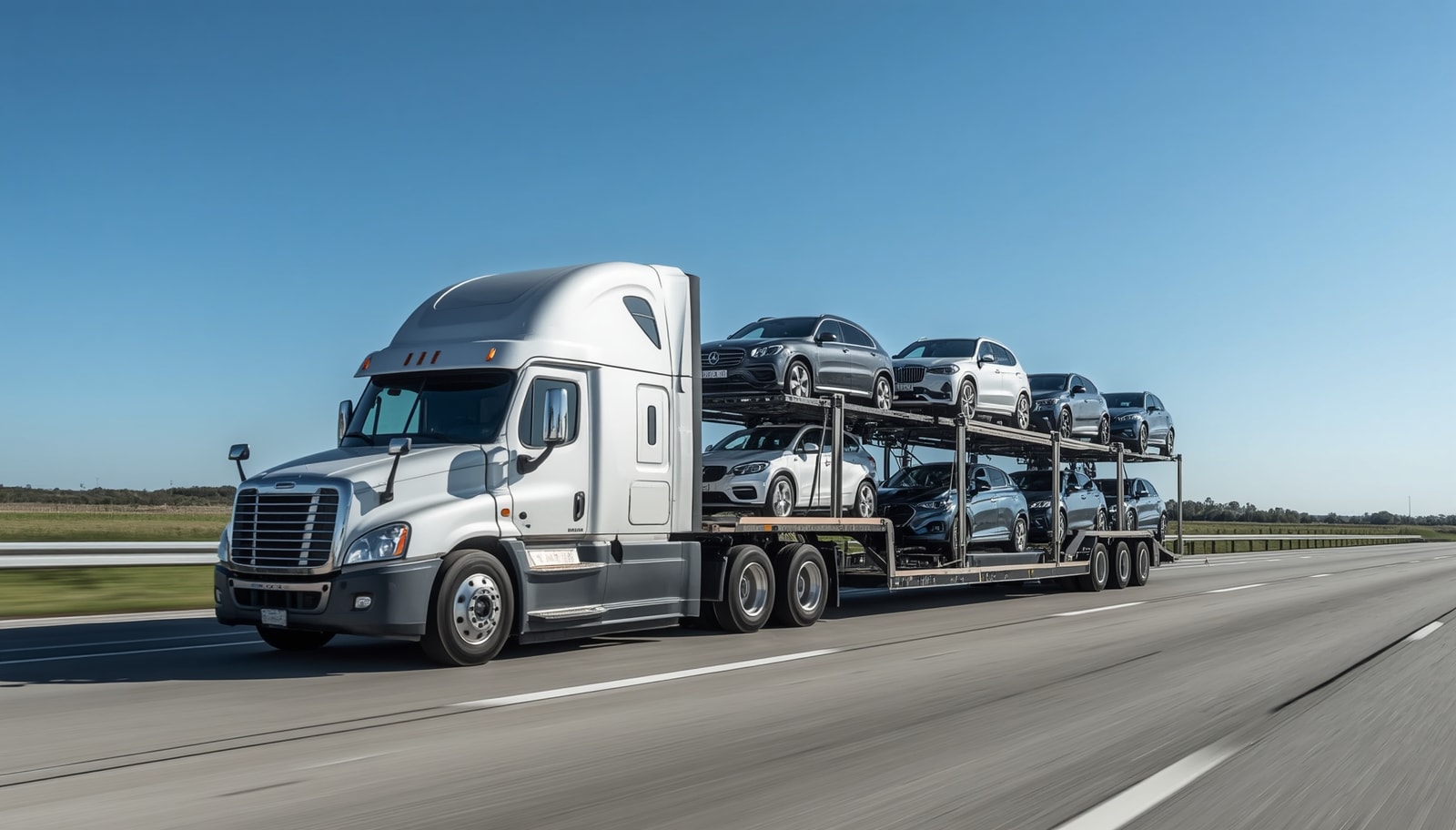
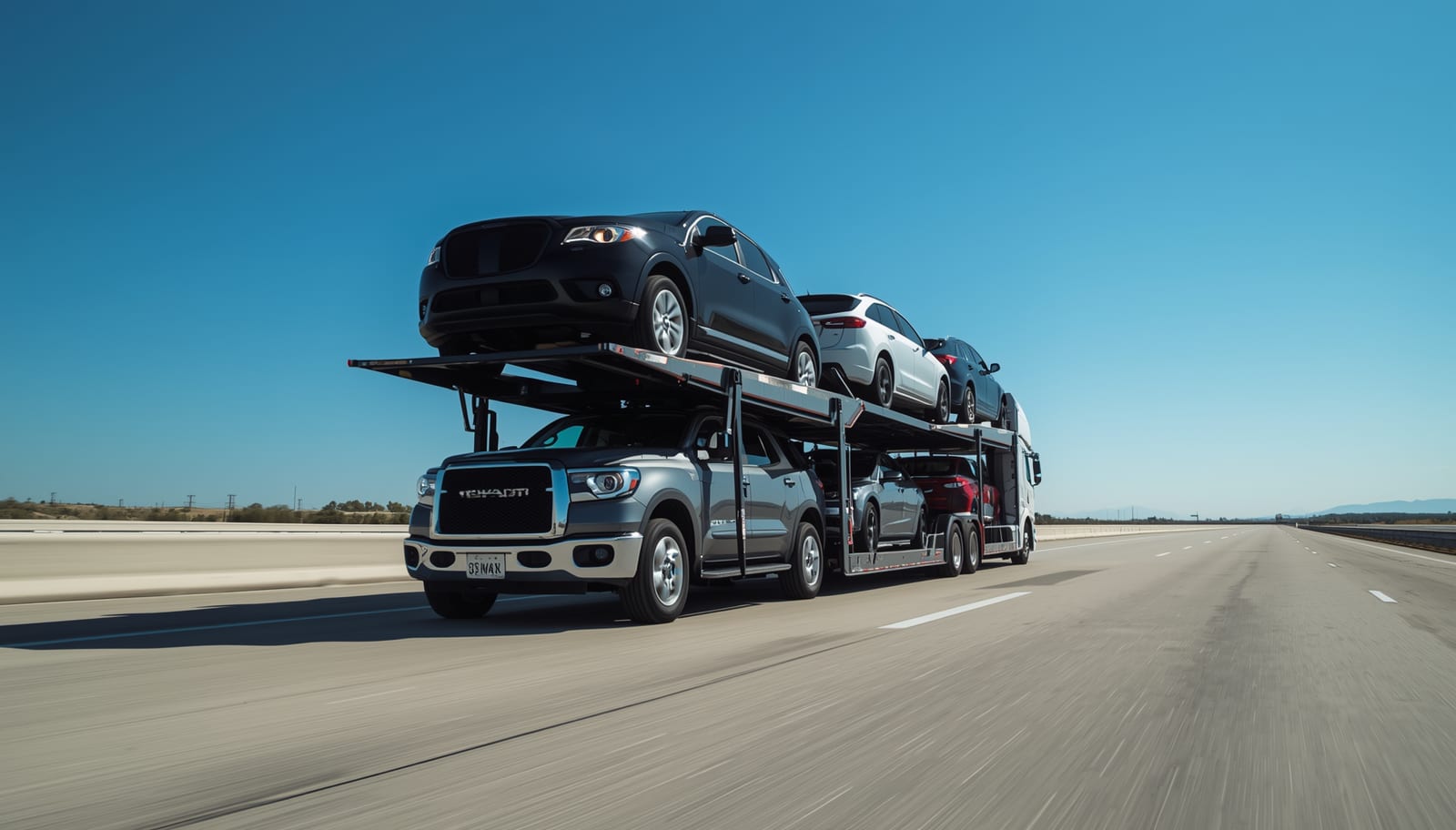
Open vs. enclosed transport: Open carriers — the multi-level trailers you see on highways loaded with 7–10 cars — are the most affordable option. Enclosed trailers (fully covered, used for luxury and classic cars) cost 30–40% more due to lower trailer capacity and higher operational cost per vehicle.
Season and demand: Auto transport pricing follows supply and demand. Summer (June–August) is the highest-demand season nationally — family moves, university arrivals, and general relocation season all peak simultaneously. January sees a snowbird surge on Florida and Arizona routes. Prices in peak season run 10–20% above fall and early spring rates.
Pickup window flexibility: If you can give the carrier 5–7 days to pick up rather than requiring next-day service, you save significantly. Expedited service — guaranteed pickup within 24–72 hours — typically costs 20–30% above standard service. Flexibility is the single easiest way to reduce your quote without sacrificing quality.
Route density: Carriers run fixed corridors. A vehicle moving from Los Angeles to New York on one of the busiest auto transport corridors in the country benefits from high carrier competition — pricing is lower. A vehicle moving from rural Montana to rural Maine, far from major carrier routes, costs more because a carrier has to deviate significantly from its regular path to service your address.
Average Car Shipping Cost by Distance (2026)
The following ranges reflect open transport rates for a standard passenger vehicle (sedan or compact SUV) in 2026. Enclosed transport: add 30–40% to these figures.
Under 500 miles (regional haul): $400–$750. Common routes: Chicago to Detroit, Los Angeles to Phoenix, New York to Philadelphia. Short hauls are the highest per-mile rate — carriers need to cover fixed costs over a short distance.
500–1,000 miles (mid-range): $700–$1,050. Common routes: Chicago to Dallas, Atlanta to New York, Seattle to Los Angeles. This is the mid-range sweet spot where per-mile rates become more efficient.
1,000–1,500 miles (long haul): $950–$1,300. Common routes: New York to Florida, Texas to California (shorter pairs), Ohio to California. Strong carrier frequency on these corridors keeps pricing competitive.
1,500–2,000 miles (cross-country): $1,100–$1,500. Common routes: New York to Texas, Florida to California, Michigan to California. These are the routes where carrier network efficiency matters most.
Over 2,000 miles (coast-to-coast): $1,300–$1,700. Common routes: New York to California, Florida to Washington, Maine to Southern California. FMCSA driving limits mean carriers need 5–7 driving days minimum, driving up total cost.
Open vs. Enclosed: The Real Cost Difference
The 30–40% premium for enclosed transport is real and consistent. Here is why it exists and who should pay it.
Enclosed trailers carry 3–7 vehicles versus 7–10 on an open carrier. The trailer itself costs significantly more to own and operate. The result is that the per-vehicle revenue required for an enclosed run to be profitable is much higher — hence the premium.
Who should pay for enclosed: luxury vehicles (BMW M, Mercedes AMG, Porsche, Ferrari, Lamborghini), classic and collector cars, freshly restored vehicles, vehicles with very low clearance susceptible to loading ramp damage, and any vehicle where a single door ding or paint chip from road debris represents a meaningful financial or sentimental loss.
Who should use open: everyone else. Open transport is how the vast majority of vehicles — including very expensive new cars shipped from manufacturer plants to dealerships — are transported. An uncovered carrier is not an unprotected carrier. Your vehicle is strapped, secured, and insured. The overwhelming majority of open-carrier deliveries arrive with zero damage.
How to Get the Most Competitive Quote
Book early: Booking 2–3 weeks ahead of your preferred pickup date gives brokers time to match your vehicle to a carrier already running your corridor without paying a premium to divert one. Last-minute bookings — within 48–72 hours — routinely cost 20–30% more.
Be flexible on pickup date: A 5–7 day pickup window versus a specific single date can reduce your quote meaningfully. Carriers build loads that maximize efficiency — if your vehicle fits naturally into an existing load, you get a lower rate.
Ship in fall or late winter: September through November and February through March are the most affordable windows for most US routes. Summer pricing peaks in July and August. January sees elevated pricing on Florida and Arizona corridors from snowbird demand.
Get 3 quotes minimum: The auto transport broker market has significant price variation for the same route on the same day. Getting quotes from two or three reputable brokers takes 10 minutes and can save $100–$300. Look for all-inclusive quotes that specify door-to-door service, no fuel surcharges, and no post-booking price changes. Verify each broker's FMCSA license number before committing — a licensed broker's MC number should be searchable and active in the FMCSA database at safer.fmcsa.dot.gov.
Red Flags: When a Quote Is Too Low to Trust
The auto transport industry has a well-documented problem with lowball bids. A broker quotes $600 for a route that legitimately costs $900, collects a deposit, and then either fails to assign a carrier or comes back with a higher price days later claiming 'market rates increased.'
Red flags to watch for: quotes significantly below every other broker for the same route and date; brokers requiring large upfront deposits before carrier assignment; no specific carrier information provided after booking; poor or no FMCSA registration details; pressure to book immediately before the 'rate expires.'
A legitimate quote from a licensed FMCSA broker should be all-inclusive, should require no payment (or a very small deposit) until a carrier is assigned, and should provide direct carrier contact information at the time of dispatch. If something feels off about a quote, trust that instinct.
The best protection against lowball bids is comparison shopping and a basic knowledge of realistic pricing ranges. Use this guide as your benchmark — if a quote is more than 20% below every other quote you receive for the same route on the same date, it is a red flag worth investigating before handing over any payment.
Source: every broker and carrier's operating authority, safety rating, and insurance status is public record — verify any company for free at the FMCSA SAFER System.
Related Articles
Cheapest Way to Ship a Car in 2026: 10 Ways to Pay Less
Open vs. Enclosed Car Transport: Which Should You Choose?
Best Time of Year to Ship a Car — And When to Avoid It