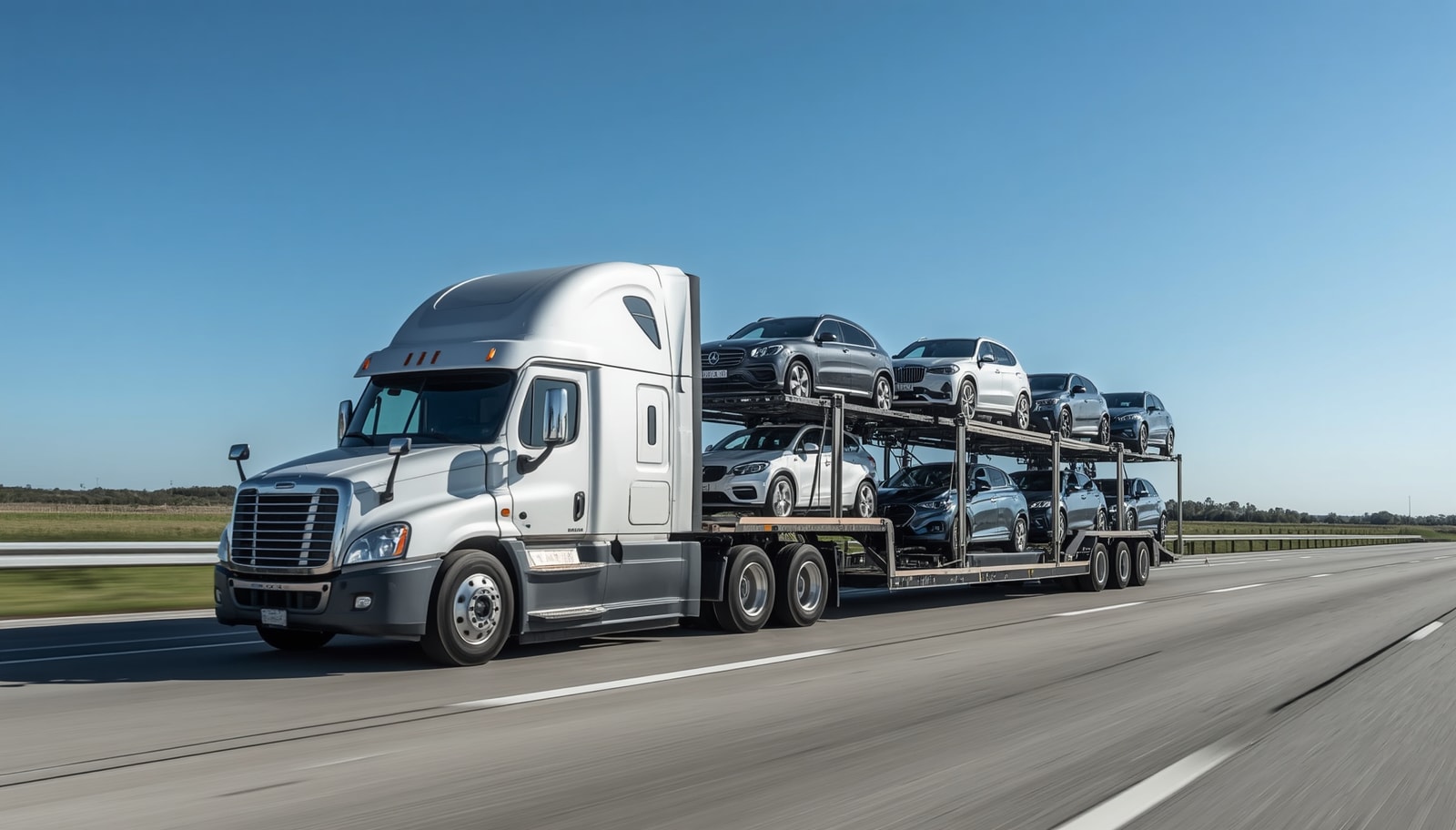
A leased car isn't fully yours — the leasing company owns it, and you're paying to use it for a set term. That doesn't stop you from moving with it, but it does add a few steps that owners of paid-off cars don't have to think about.
The good news: shipping a leased car is completely normal, and it can actually help you stay within your lease's mileage limit. This guide walks through who to call, what paperwork changes, what it costs, and the mistakes that can turn a simple move into a lease violation.
Free car shipping quote
What will it cost to ship your car?
Get Your Free Quote
Free quote in 60 seconds · We never sell your info
Can You Ship a Leased Car to Another State?
Yes. Leasing companies know people move, and most leases allow it. What they usually require is that you tell them first, and some ask for written approval before the car leaves the state for an extended time. The Federal Reserve's consumer guide to leasing points out that a lease may restrict moving the vehicle out of state and that you should check with the lessor before relocating.
Why do they care? The leasing company holds the title, pays attention to where the car is registered and taxed, and needs to know where to reach the car at the end of the lease. Moving without telling them can count as a breach of contract, even if your payments are on time.
Before you book anything, find these in your lease agreement:
- Any clause about moving, relocating or keeping the vehicle out of state
- Whether you need written consent, and how much notice to give
- Fees for re-registering or transferring the lease to another state
- Rules about who may drive or transport the car
Step-by-Step: Shipping a Leased Car
1. Call your leasing company. Tell them your move date and new address. Ask what they need from you and whether they'll send a letter authorizing transport. Get any approval in writing.
2. Ask about registration in your new state. Because the lessor holds the title, they usually need to send title documents or a power of attorney to your new state's DMV. This can take a few weeks, so start early.
3. Update your insurance. Your policy must meet the lease's coverage requirements and your new state's minimums. Rates often change when you move.
4. Get a shipping quote and book. Give the transport company your first available pickup date and both addresses. Mention that the car is leased — some ocean carriers to Hawaii or Alaska require a letter from the lessor.
5. Prepare the car. Wash it, photograph every side and the odometer, leave about a quarter tank of fuel and remove personal items and toll tags.
6. Inspect at pickup and delivery. The driver records the car's condition on the Bill of Lading. Compare at delivery and note any new damage before signing — that record protects you at lease return, too.
Shipping vs. Driving: Protecting Your Mileage Allowance
Most leases allow 10,000–15,000 miles a year and charge for every mile over — often 15 to 30 cents a mile, depending on the lease. A cross-country drive can put 2,500–3,000 miles on the car in a week. At 25 cents a mile, that's $625–$750 in potential overage charges before you even count fuel, hotels and food.
Shipping adds almost no miles. The car is driven onto and off the trailer, and that's it.
For many lessees close to their mileage limit, shipping costs about the same as driving once overage charges and wear are counted — and it saves a week of driving. See is it cheaper to fly or drive for the full math.
- Driving Coast to Coast
- About 2,500–3,000
- Shipping Coast to Coast
- Almost none
- Driving Coast to Coast
- $625–$750
- Shipping Coast to Coast
- $0
- Driving Coast to Coast
- Several hundred dollars
- Shipping Coast to Coast
- None
- Driving Coast to Coast
- —
- Shipping Coast to Coast
- About $1,300–$1,800
- Driving Coast to Coast
- Tires, brakes, oil change, chips
- Shipping Coast to Coast
- Minimal
| Factor | Driving Coast to Coast | Shipping Coast to Coast |
|---|---|---|
| Miles added | About 2,500–3,000 | Almost none |
| Possible mileage overage (at $0.25/mi) | $625–$750 | $0 |
| Fuel, hotels, food | Several hundred dollars | None |
| Shipping cost (open carrier) | — | About $1,300–$1,800 |
| Wear and tear | Tires, brakes, oil change, chips | Minimal |
Want your actual price? Request a free quote in 60 seconds — no payment, no spam.
Get My Free Quote →Registration, Taxes and Fees After the Move
Registration deadlines vary by state, often 30 to 90 days after you become a resident. Because the leasing company owns the car, the title transfer goes through them, so contact them as soon as you know your new address.
Sales tax on lease payments works differently from state to state. Most states tax each monthly payment at the local rate, so your payment may go up or down after a move. A few states handle lease tax differently or have no sales tax, so ask the leasing company how your payment will change.
Personal property tax applies to vehicles in some states. Even though the lessor owns the car, that cost is usually passed on to you.
Inspection and emissions rules depend on the new state and county. See our guide to state vehicle shipping regulations.

How Much Does It Cost to Ship a Leased Car?
The same as any other car. Price depends on distance, vehicle size, open or enclosed transport and timing — not on who owns the title.
Enclosed transport costs about 35% more. It's worth considering for a leased luxury car, because any chips or scratches will be charged as excess wear when you return it. Use the car shipping calculator to check the distance for your route.
- Open Carrier (Standard Sedan)
- $400–$750
- Open Carrier (Standard Sedan)
- $700–$1,050
- Open Carrier (Standard Sedan)
- $950–$1,300
- Open Carrier (Standard Sedan)
- $1,100–$1,500
- Open Carrier (Standard Sedan)
- $1,300–$1,800
| Distance | Open Carrier (Standard Sedan) |
|---|---|
| Under 500 miles | $400–$750 |
| 500–1,000 miles | $700–$1,050 |
| 1,000–1,500 miles | $950–$1,300 |
| 1,500–2,000 miles | $1,100–$1,500 |
| 2,000+ miles | $1,300–$1,800 |
Returning a Leased Car After You Move
Many brand-affiliated leasing companies let you return the car at any of that brand's dealerships, not just the one where you signed. If so, you can simply return it near your new home. Confirm this with the lessor before the lease ends.
If your lease requires returning the car to a specific location, or you've bought out the lease and sold it to a buyer elsewhere, shipping it there is usually simpler than a long one-way drive.
Leased Cars and Military Moves
Service members with PCS orders have extra protections. Under the Servicemembers Civil Relief Act (SCRA), a service member can often end a vehicle lease early without penalty when they receive qualifying orders — such as a move outside the continental U.S. or a deployment of 180 days or more. If you're keeping the car instead, shipping it to your new duty station follows the same steps above. See military car shipping and PCS vehicle shipping reimbursement.
Want your actual price? Request a free quote in 60 seconds — no payment, no spam.
Get My Free Quote →Common Mistakes to Avoid
- Moving without telling the lessor. It can be a lease violation even if every payment is on time.
- Waiting too long on registration. The title transfer goes through the leasing company and can take weeks.
- Driving across the country near your mileage cap. Overage charges add up fast.
- Skipping inspection photos. Without them, it's hard to prove a scratch happened in transit rather than before.
- Forgetting the authorization letter for ocean shipping to Hawaii or Alaska.
Frequently Asked Questions
Can I ship my leased car to another state?: Yes. Most leases allow it, but you usually need to notify the leasing company first, and some require written approval.
Do I need permission from the leasing company to ship my car?: Check your lease. Many require notice before you move the car out of state, and ocean carriers to Hawaii or Alaska often ask for an authorization letter from the lessor.
Does shipping a leased car add miles?: Barely. The car is only driven on and off the trailer, which is a big advantage if you're close to your mileage limit.
Who registers a leased car in the new state?: You start the process, but the leasing company holds the title and usually has to send documents or a power of attorney to the new state's DMV.
Will my lease payment change after I move?: It might. Most states tax lease payments at the local rate, so your monthly payment can go up or down.
Is a leased car insured during shipping?: The carrier's cargo insurance covers damage caused during transport. Keep your own policy active too, as your lease requires.
Can I return my leased car at a dealer in my new state?: Often, yes, if the leasing company allows returns at any of the brand's dealers. Confirm before your lease ends.
How much does it cost to ship a leased car?: The same as any car — about $400–$750 for short trips up to $1,300–$1,800 coast to coast on an open carrier.
Source: every broker and carrier's operating authority, safety rating, and insurance status is public record — verify any company for free at the FMCSA SAFER System.
Related Articles

Vehicle Relocation Guide: How to Ship Your Car When You Move

Is It Cheaper to Fly or Drive? The Real Cost Comparison (2026)