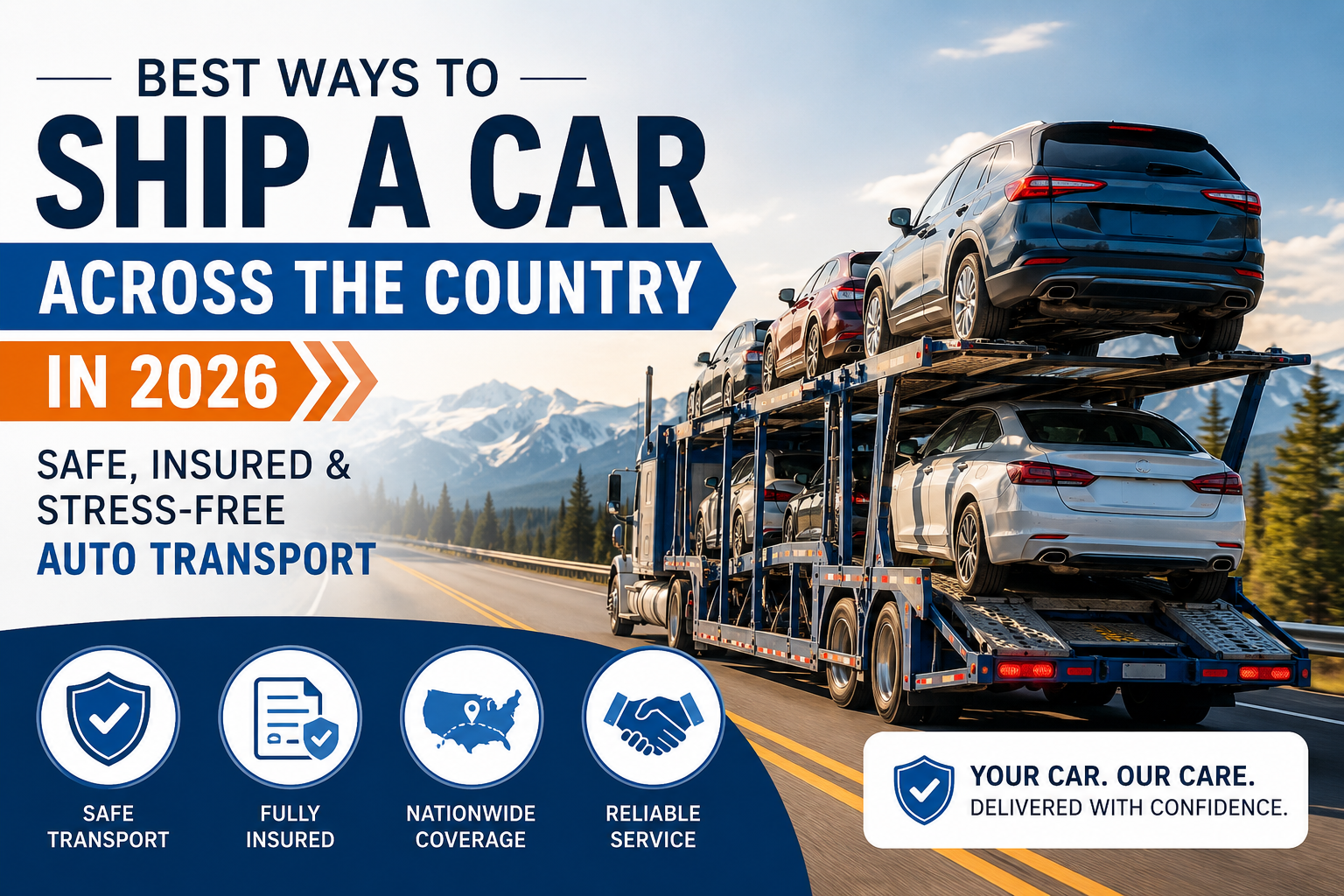
Driverless trucks are no longer just a concept. In 2025, autonomous freight trucks began hauling commercial loads on Texas highways without anyone in the cab. That raises an obvious question for car shipping: will a driverless truck be moving your car soon?
Probably not for a long time. This guide explains what's actually operating, why car hauling is one of the hardest trucking jobs to automate, and what a realistic timeline looks like.
Free car shipping quote
What will it cost to ship your car?
Get Your Free Quote
Free quote in 60 seconds · We never sell your info
What's Actually Operating Today
- Aurora began driverless commercial freight runs between Dallas and Houston in 2025.
- Kodiak Robotics has run driverless trucks in oilfield operations in the Permian Basin.
- Several other companies are testing on highway corridors in Texas, Arizona and the Southwest, often with safety drivers still on board.
These are mostly box-trailer freight runs on carefully mapped highway routes, between fixed terminals.
Level 4 vs. Level 5, in Plain English
Level 4: The truck drives itself, but only in specific conditions — certain highways, certain weather, mapped routes. Today's driverless trucks are Level 4.
Level 5: The truck drives itself anywhere a human could. No one has this yet.
Car shipping often needs to go from any origin to any destination, including residential streets. That's much closer to a Level 5 problem.
Why Car Carriers Are Harder to Automate
Driving is only part of a car hauler's job. The driver also:
- Inspects every vehicle and fills out the Bill of Lading with the customer
- Loads and unloads up to ten vehicles, adjusting hydraulic decks
- Secures each car with straps or chains
- Re-checks straps along the route
- Navigates residential streets and tight pickup spots
Even if a truck could drive itself between hubs, a person would still need to handle loading, securing and the customer hand-off.
Want your actual price? Request a free quote in 60 seconds — no payment, no spam.
Get My Free Quote →Regulation and Insurance
States regulate autonomous trucks differently. Texas and several Sun Belt states allow driverless operation; others restrict it or require a human on board. Insurance is another gate: insurers need data showing that an autonomous truck carrying high-value vehicles is at least as safe as a human driver before coverage becomes affordable.
A Realistic Timeline for Auto Transport
- Near term: Better dispatch software and route planning — already happening.
- Medium term: Possible hub-to-hub autonomous highway legs, with human drivers handling loading and the first and last miles.
- Long term: Fully driverless door-to-door car hauling is likely many years away.
Lower prices aren't guaranteed either. Labor is only one cost; fuel, equipment, insurance and compliance remain.
Does It Solve the Driver Shortage?
Only partly, and not soon for car hauling. For what the shortage means for your shipment today, read how the truck driver shortage affects car shipping.
What Could Change First for Car Shipping
Even without driverless car haulers, technology from the autonomous trucking world is already improving auto transport:
- Smarter dispatch: Software that matches vehicles to trucks already heading the right way, cutting empty miles.
- Better tracking: GPS updates that let customers see where their car is.
- Driver-assist systems: Collision avoidance and lane-keeping features on newer trucks.
- Route planning: Tools that account for weather, bridges and height limits.
These changes improve reliability more than they lower prices.
Want your actual price? Request a free quote in 60 seconds — no payment, no spam.
Get My Free Quote →What It Means for Your Next Shipment
For now, nothing changes about how you ship a car. A professional driver will still inspect your car, load it, secure it, drive it and hand it over at delivery. The best ways to get a fast, fair shipment are the same as ever: book two to three weeks ahead, stay flexible on dates and choose a licensed, insured carrier.
Read how the truck driver shortage affects car shipping and when to book car shipping.
Signs to Watch for in the Industry
- Autonomous freight expanding beyond Texas corridors
- States updating laws to allow driverless trucks
- Insurers publishing coverage terms for autonomous freight
- Hub-to-hub pilots that pair autonomous highway legs with human loading
If those milestones arrive for car hauling, they'll likely start on long, simple interstate lanes between major hubs.
Why Freight Autonomy Isn't Auto Transport Autonomy
A box-trailer freight run is simple from an automation point of view. A dock crew loads the trailer at a warehouse, the truck drives a mapped highway route, and another crew unloads it at the destination. The truck never touches a customer's driveway.
Car hauling is the opposite. Each truck may make eight to ten separate pickups and deliveries, many at homes on residential streets. At each stop, the driver inspects a car with the customer, records damage, operates a hydraulic deck, drives the car on, secures it and re-checks straps along the way. That combination of skilled physical work and customer interaction is exactly what autonomous systems can't do today.
Who's Operating Autonomous Trucks Today
- Aurora runs driverless commercial freight on Texas highways, starting with the Dallas–Houston corridor.
- Kodiak Robotics operates driverless trucks in specific industrial settings, such as oilfield hauling in West Texas.
- Other developers test on Sun Belt corridors, often with safety drivers still aboard.
These programs focus on long, predictable highway lanes between fixed terminals — the easiest part of trucking to automate.
State-by-State Rules
There's no single national rule for driverless trucks. Some states, including Texas and several in the Sun Belt, allow autonomous operation without a human on board under certain conditions. Others restrict it or require a safety driver. Any long-distance autonomous car hauling would need permission in every state on the route, which is one more reason cross-country car shipping will rely on human drivers for a long time.
Insurance: The Hidden Gatekeeper
Insurers set the terms for commercial trucking, and they need years of safety data before pricing new risks. A car carrier holds hundreds of thousands of dollars in customer vehicles. Until insurers are comfortable that an autonomous truck carrying that cargo is at least as safe as a professional driver, coverage will be expensive or unavailable — and without affordable coverage, no carrier can operate.
What a Hybrid Model Might Look Like
The most realistic path is a hybrid. Human drivers would handle pickups, inspections and loading at local hubs. An autonomous truck could then run the long highway leg between hubs, where most of the miles are. Another human-driven truck would handle final delivery. This would look a lot like line haul transport today, with automation on the middle leg. It's possible on some lanes in the future, but it requires hubs, new handoff procedures and regulatory approval along the route.
What to Expect as a Customer in the Meantime
- Better tracking and communication from improved dispatch software
- More accurate pickup windows as routing tools improve
- The same human inspection and Bill of Lading process at pickup and delivery
- Prices driven by the usual factors — distance, season, fuel and carrier supply
See how much does it cost to ship a car and how to track your vehicle during transport.
Common Myths About Driverless Trucks and Car Shipping
"Driverless trucks will make car shipping cheap overnight." Labor is only part of the cost. Trucks, trailers, fuel, insurance, maintenance and compliance remain, and new technology adds its own costs.
"Car carriers will be the first to go driverless." They'll likely be among the last, because of how much hands-on work happens at each stop.
"Brokers won't be needed." Matching vehicles with available capacity is still necessary whether trucks have drivers or not.
"Autonomous trucks will end the driver shortage." They may ease it on some freight lanes, but specialized hauling will still need skilled drivers. See how the truck driver shortage affects car shipping.
A Realistic Timeline, in More Detail
- Now: Driverless freight on selected Texas corridors; human-driven car carriers everywhere.
- Next few years: More freight lanes in the Sun Belt; more automation in dispatch and tracking for car carriers.
- Longer term: Possible hub-to-hub autonomous legs for vehicle transport on a few high-volume lanes, with human crews at each end.
- Much later: Anything resembling fully driverless door-to-door car hauling.
Frequently Asked Questions
Will my car be shipped by a driverless truck soon?: Unlikely. Car hauling involves loading, securing and inspecting vehicles, which autonomous trucks can't do on their own.
Which autonomous trucking companies are operating?: Aurora and Kodiak are among the companies running driverless trucks commercially, mainly on specific freight routes in Texas.
Will autonomous trucks make car shipping cheaper?: Not necessarily. Fuel, equipment, insurance and compliance costs remain, and early autonomous services may cost more.
Do autonomous trucks solve the driver shortage?: Only partly, and car hauling is one of the last segments likely to be automated.
Are any car carriers driverless today?: No. Driverless trucks are running some freight routes, but car carriers still need human drivers for loading, securing and inspections.
Could autonomous trucks make car shipping faster?: Possibly on long highway legs, since they aren't limited by driver hours. Pickup and delivery would still depend on human crews.
Will my car shipping quote change because of autonomous trucks?: Not in the near term. Quotes are still driven by distance, season, fuel and carrier availability.
Will brokers still exist if trucks become autonomous?: Very likely. Matching vehicles to available trucks, routes and schedules is still needed regardless of who — or what — is driving.
Where can I follow autonomous trucking news?: State transportation departments and the FMCSA publish updates on rules, and the companies running pilots announce new lanes. For your shipment, nothing changes — book with a licensed, insured carrier as usual.
Do autonomous trucks operate at night?: Some are designed to, which is one of their potential advantages for long freight runs. Any change for car hauling is still years away.
Source: every broker and carrier's operating authority, safety rating, and insurance status is public record — verify any company for free at the FMCSA SAFER System.
Related Articles
How the Truck Driver Shortage Affects Car Shipping Prices and Timing
EV Weight and Car Carrier Capacity: Why Electric Cars Can Cost More to Ship