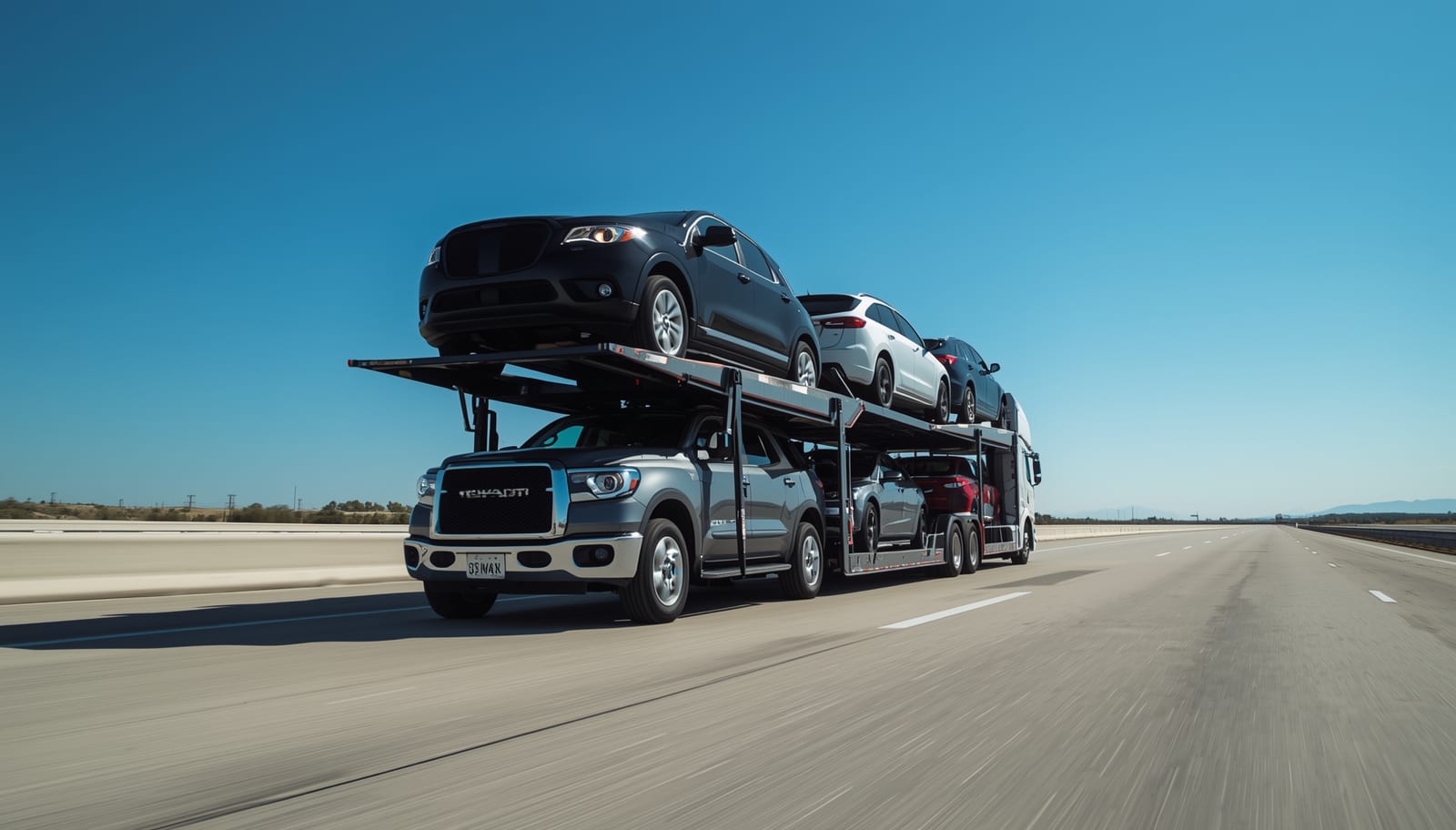
New car prices have climbed, and tariffs on imported vehicles and parts are one reason. If you're buying or moving a car, it's fair to wonder whether tariffs also raise what it costs to ship one.
For domestic car shipping, mostly no — at least not directly. Tariffs move car prices and demand, which affects where people buy and ship cars. This guide explains the difference.
Free car shipping quote
What will it cost to ship your car?
Get Your Free Quote
Free quote in 60 seconds · We never sell your info
The Auto Tariffs in Brief
In 2025, the U.S. imposed a 25% tariff on many imported vehicles under Section 232, followed by tariffs on many imported auto parts. Trade agreements with some countries later set different rates for their vehicles. Because even U.S.-built cars rely on imported parts, the effect reaches beyond imported models.
Tariff policy has changed frequently, so check current rules if you're importing a vehicle or parts.
Why Are Cars So Expensive Right Now?
Tariffs are one factor among several:
- Tariff costs passed through on imported vehicles and parts
- Higher interest rates, which raise monthly payments
- Rising insurance and repair costs
- Lingering effects of supply shortages from earlier years
- A shift toward pricier trims, trucks and SUVs
Higher new car prices also push more buyers into the used market, which raises used prices too.
Do Tariffs Raise Domestic Car Shipping Rates?
Not directly. Shipping a car from Texas to Ohio doesn't involve any tariff. Domestic rates are set by carrier supply and demand, fuel, distance and season — see how much does it cost to ship a car.
Indirect effects do exist. Truck parts, trailers and tires can cost more, which nudges carriers' operating costs up over time. And higher vehicle values can raise insurance costs for carriers.
Want your actual price? Request a free quote in 60 seconds — no payment, no spam.
Get My Free Quote →How Tariffs Change Where People Buy and Ship Cars
When prices rise, buyers search wider to find a better deal — often in another state. That increases demand for long-distance used car transport, especially from large markets like Texas, Florida and California, and from auctions. If you're buying out of state, read our auction pickup guide and buying a car online.
Importing a Classic Car
Vehicles 25 years or older can generally be imported without meeting modern U.S. safety and emissions standards (the "25-year rule"). That's a separate question from tariffs, and duties on imported vehicles can still apply. Talk to a licensed customs broker before you buy a car overseas.
For moving cars out of the country or arranging ocean freight, see international car shipping and containerized vehicle shipping.
What This Means for You
- Domestic shipping prices follow the usual factors — not tariffs.
- If higher prices push you to buy out of state, add shipping to your total cost.
- For imports, budget for duties and work with a customs broker.
For a quote on moving a car you bought out of state, use the car shipping calculator.
The Used Car Ripple Effect
When new cars get more expensive, more buyers turn to used cars. That raises used prices and makes buyers search farther for good deals. Dealers also buy more inventory at auctions and from other regions. All of that moves more cars across state lines.
For shoppers, it means a wider search can pay off. A car that's cheaper in another state may still be the better deal after shipping. See cost to ship a car by distance.
Want your actual price? Request a free quote in 60 seconds — no payment, no spam.
Get My Free Quote →What It Means for Dealers
- More auction buying from distant markets
- More dealer trades between stores in different states
- Tighter margins, which makes efficient multi-car shipping more important
Dealers can lower per-car transport costs with multi-car loads and standing arrangements. See transporting cars for dealerships and auto transport for car resellers.
Practical Advice for Buyers Right Now
- Compare prices across several states, not just locally.
- Get a shipping quote before you commit to an out-of-state car.
- Check the car's history and condition remotely before paying.
- Consider certified pre-owned programs, which often include inspections.
- If you're importing a car, talk to a customs broker about duties first.
How Much Have Tariffs Raised Car Prices?
Estimates vary depending on the vehicle, where it's built and how much of the tariff automakers absorb versus pass on. Imported models and vehicles with a high share of imported parts are affected most. U.S.-assembled vehicles are affected less, but most still use imported components. Automakers have responded differently — some raised prices, some trimmed incentives, and some absorbed part of the cost to protect sales.
For shoppers, the practical effect is that sticker prices and dealer discounts have shifted, and the gap between models has changed. That makes comparison shopping across regions more valuable than before.
Brands and Models Most Affected
- Imported luxury brands built overseas tend to see the biggest direct impact.
- Popular imported compact cars and crossovers from Asia and Europe can see price changes or reduced incentives.
- Pickups and large SUVs built in North America are affected mainly through parts.
- Some low-volume imports may be limited or paused while automakers reassess pricing.
If the exact model you want is scarce locally, expanding your search to other states can help — and shipping makes that practical.
Why Used Car Prices Rise Too
When new cars get more expensive, some buyers who would have bought new choose a late-model used car instead. That extra demand pushes up used prices, especially for vehicles one to five years old. Dealers compete harder for used inventory at auctions, which can raise wholesale prices. For buyers, it means good used deals are often found by searching wider.
What This Means for Your Shipping Decision
Shipping a car you found in another state makes sense when the savings beat the shipping cost. A rough guide:
- Under 500 miles: Shipping typically runs $400–$750, so savings of $1,000 or more usually justify it.
- 500–1,500 miles: Shipping typically runs $700–$1,300.
- Coast to coast: About $1,300–$1,800.
Also count the time saved by not flying out and driving the car home. See cost to ship a car by distance.
Importing Classics Under the 25-Year Rule
Cars at least 25 years old can generally be imported into the U.S. without meeting current federal safety and emissions standards. That's why many enthusiast imports, such as older Japanese and European models, arrive once they turn 25. The rule doesn't waive duties or taxes, and some states have their own emissions rules for registration. Work with a licensed customs broker, plan for port fees and inland transport, and check your state's registration requirements before you buy.
Other Reasons Car Prices Stay High
- Technology content: Safety systems, screens and driver assistance add cost.
- Shift to trucks and SUVs: Higher-priced segments now make up most sales.
- Fewer low-cost models: Many automakers have dropped entry-level sedans.
- Higher insurance and repair costs: Raise the total cost of ownership.
- Financing costs: Higher rates raise monthly payments even when prices are stable.
Tariffs, Parts and Repair Costs
Tariffs on imported parts can raise repair costs, especially for vehicles that rely on imported components. That affects insurance premiums, since insurers price policies on expected repair costs. For car shipping, higher repair costs mainly show up in carrier insurance premiums over time. They don't change how your shipment is priced on a given day, which still depends on distance, season, fuel and carrier supply.
More Dealer Trades and Cross-Country Auctions
When supply of a model is tight in one region, dealers trade inventory with stores in other states or buy at distant auctions. That steady flow of dealer-to-dealer and auction-to-lot moves keeps carriers busy on major corridors. For buyers, it can mean more choice in local inventory — cars that started in another state but were shipped in by the dealer.
The Bottom Line
Tariffs have pushed up the cost of many new vehicles and parts, and that has rippled into used car prices. Domestic car shipping prices haven't changed because of tariffs directly — they still follow carrier supply, fuel and season. If higher prices are pushing you to search farther for the right car, shipping is often what makes an out-of-state deal worthwhile. Get a quote before you buy so you know the full cost.
Frequently Asked Questions
Why are cars so expensive?: Tariffs on imported vehicles and parts, higher interest rates, rising insurance and repair costs, and demand for pricier trims all play a role.
Do tariffs affect domestic car shipping rates?: Not directly. Domestic rates depend on carrier supply, fuel, distance and season, though higher equipment costs can have small indirect effects.
Are classic cars exempt from tariffs?: The 25-year rule covers safety and emissions standards, not duties. Check current duty rates with a customs broker.
Does buying out of state make sense with higher car prices?: It can. Just include shipping in your total cost when comparing deals.
Are used cars cheaper in some states?: Often. Large markets like Texas, Florida and California tend to have more inventory, which can mean better prices.
Do tariffs affect international car shipping?: Tariffs and duties apply to imported vehicles, and destination countries set their own duties for exports. Ocean freight rates are set separately.
Should I wait for prices to fall before buying?: That depends on your needs and the market. Widening your search area is one way to find better prices now.
Will car shipping prices go up because of tariffs?: Not directly. Domestic shipping prices follow carrier supply, fuel, distance and season. Indirect effects, like higher truck parts costs, are small and gradual.
Is it worth buying a car in another state to save money?: It can be, if the savings are bigger than the shipping cost and any extra registration costs.
Does it cost more to ship an imported car within the U.S.?: No. Domestic shipping costs depend on size, weight, distance and route, not where the car was built.
Source: every broker and carrier's operating authority, safety rating, and insurance status is public record — verify any company for free at the FMCSA SAFER System.
Related Articles
Buying a Car Online? How Shipping Works With Carvana, Bring a Trailer and More