Shipping a car across the country is one of the smartest decisions you can make when relocating, buying a vehicle online, or moving for a new job. Driving 2,000-plus miles costs more than most people realize once you factor in fuel, hotel stays, meals, vehicle wear, and lost time. Auto transport is often cheaper, faster, and far less stressful — but only if you choose the right method and the right company.
The auto transport industry in 2026 is more competitive, more regulated, and more customer-friendly than ever before. New booking platforms have made pricing more transparent, FMCSA enforcement has pushed unreliable brokers out of the market, and GPS tracking has become a standard expectation. If you shipped a car five or ten years ago, the experience today is dramatically better.
This guide breaks down every major car shipping method, what each one costs, how long each takes, and exactly what to look for when choosing a carrier. Whether you are a first-time shipper or have done this before, you will find everything you need to make a confident, informed decision.
Open Car Transport: The Most Popular Method for a Reason
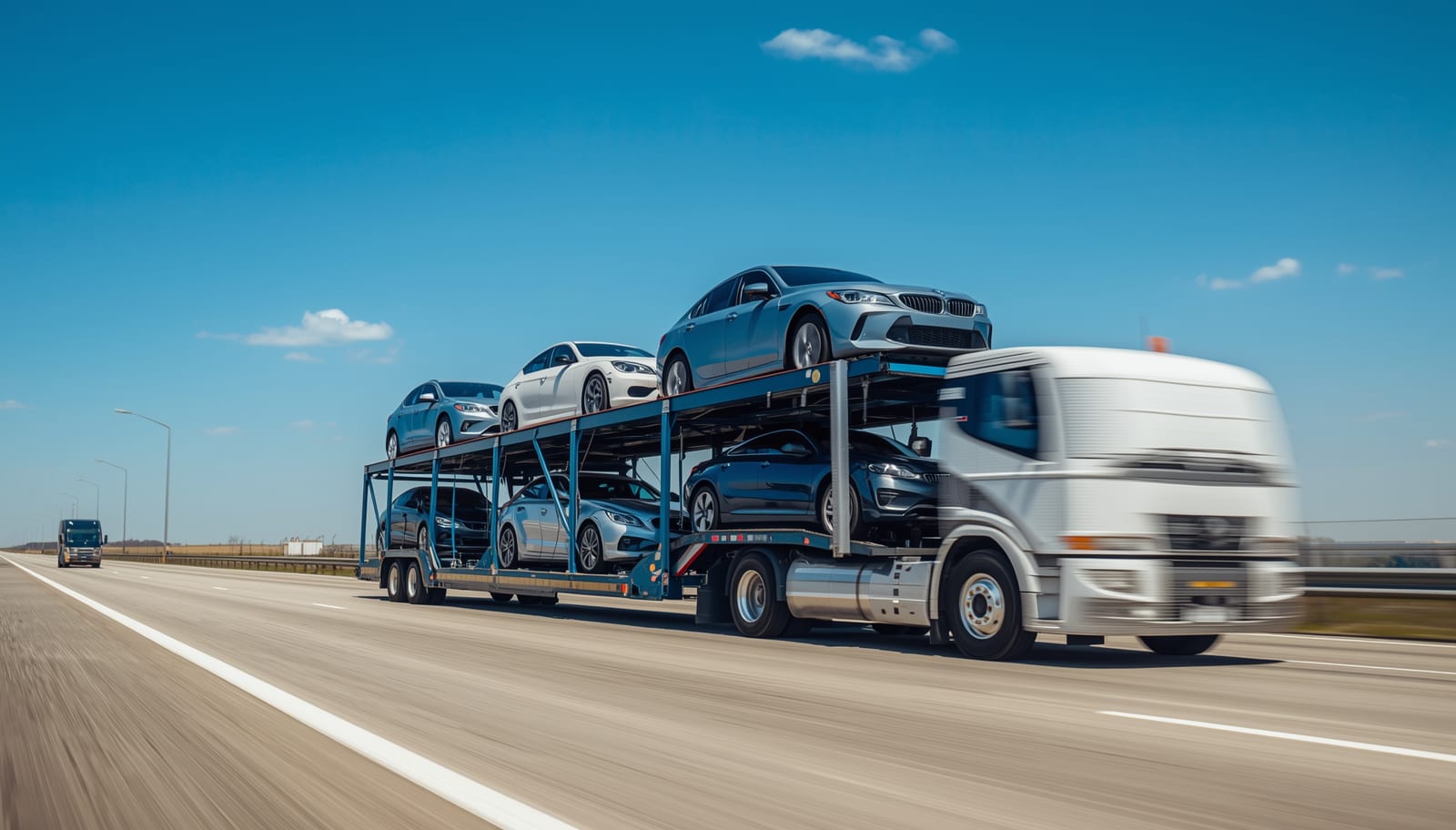
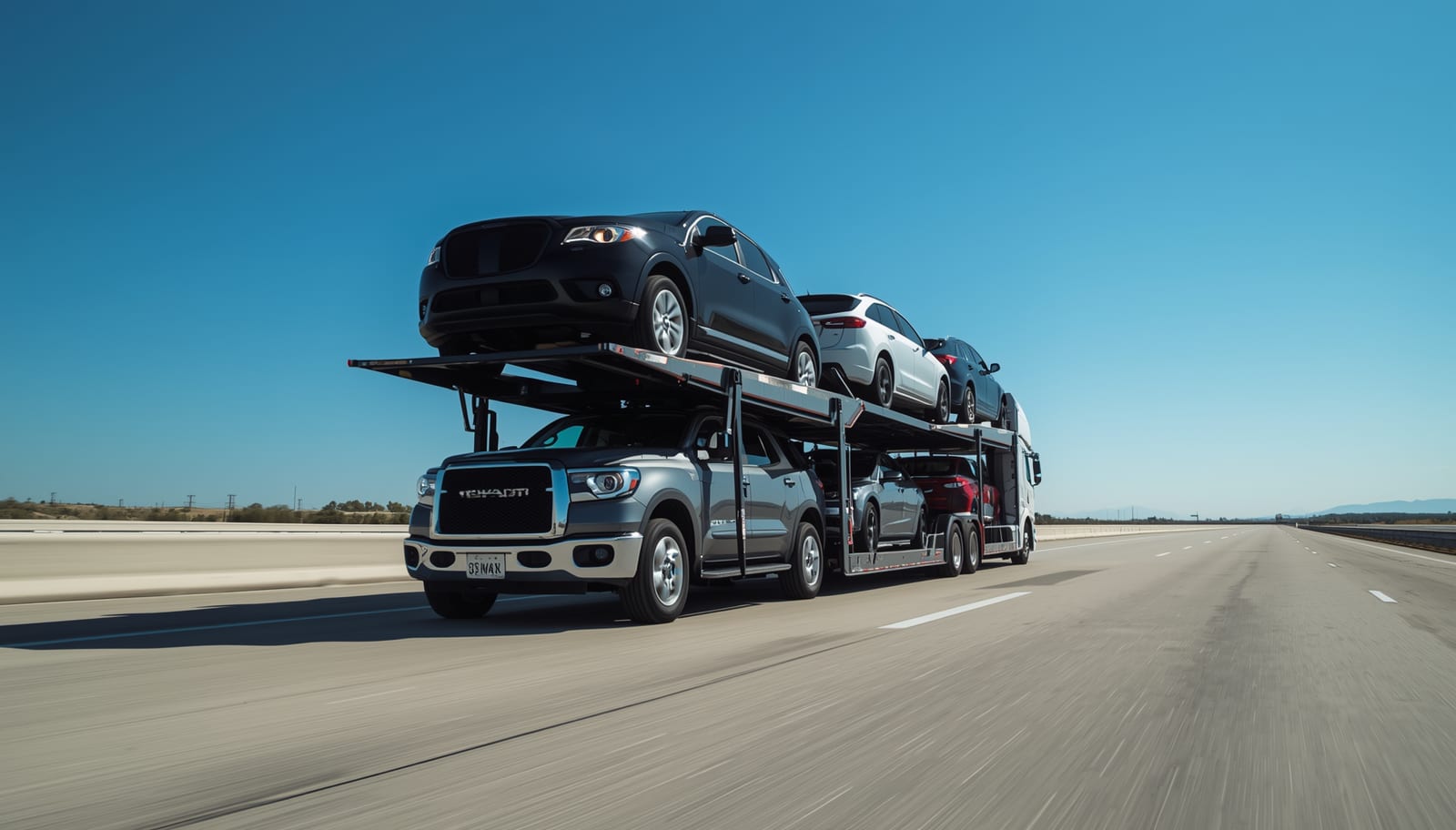
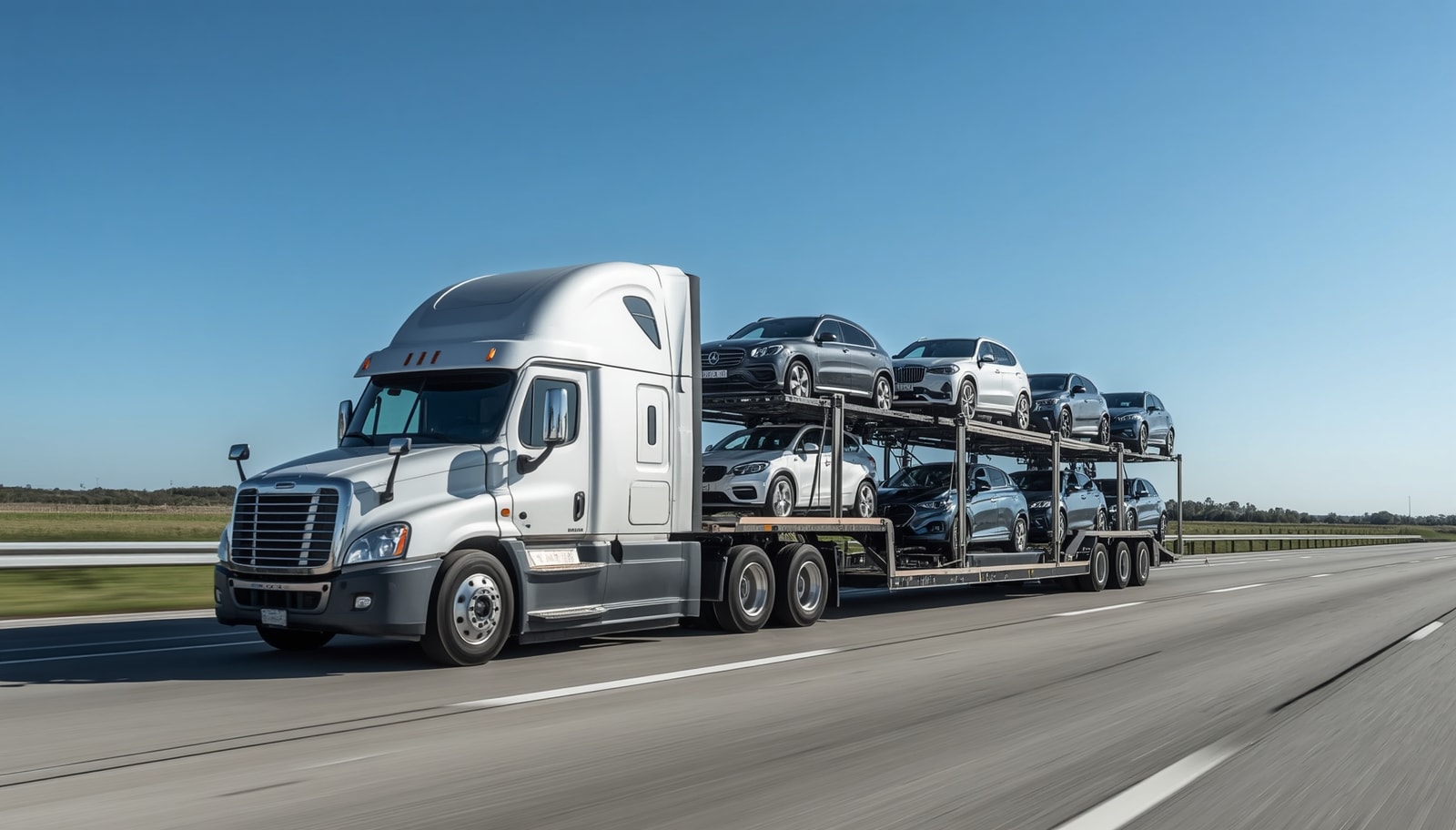
Open car transport is how roughly 90 percent of all vehicles in the United States are shipped, including brand-new cars delivered from the factory to dealerships every day. If you have seen those massive multi-level truck carriers on the highway stacked with vehicles, you have seen open transport in action.
Your vehicle is loaded onto an open trailer alongside up to nine other cars, secured with professional wheel straps, and driven to its destination. Drivers on these routes are professional, licensed carriers who handle hundreds of vehicles per year.
What open transport costs in 2026: - Under 500 miles: $250 to $600 - 500 to 1,000 miles: $500 to $900 - 1,000 to 2,000 miles: $800 to $1,300 - Over 2,000 miles (cross-country): $950 to $1,600
Prices vary based on vehicle size, time of year, and route demand. The cross-country corridor between California and Florida is one of the highest-demand routes in the country and typically prices toward the middle of the range year-round.
Who should choose open transport: Standard sedans, SUVs, trucks, minivans, and any vehicle under $60,000 in value. If your car is what you drive every day and it is in good condition, open transport is almost always the right answer. It is safe, widely available, and cost-effective.
The one downside: Your vehicle is exposed to the elements during transit. Rain, road debris, and dust will reach the exterior. This is not a problem for most vehicles — the same exposure happens every time you drive — but it is a consideration for high-end, classic, or show cars.
Enclosed Car Transport: Maximum Protection for Valuable Vehicles
Enclosed transport places your vehicle inside a fully covered trailer, protected from weather, road debris, UV exposure, and prying eyes. It is the premium option and carries a 30 to 40 percent cost premium over open transport.
What enclosed transport costs in 2026: - Under 500 miles: $400 to $900 - 500 to 1,000 miles: $750 to $1,300 - 1,000 to 2,000 miles: $1,100 to $1,800 - Over 2,000 miles (cross-country): $1,400 to $2,400
The higher price reflects smaller trailers, more specialized equipment, fewer vehicles per load, and drivers with experience handling premium vehicles.
Who should choose enclosed transport: - Luxury vehicles valued over $50,000 to $60,000 - Exotic and supercar owners (Ferrari, Lamborghini, McLaren, Porsche) - Classic and vintage car collectors - Vehicles with aftermarket body modifications or custom paint - Low-clearance sports cars with front splitters or wide-body kits - Any vehicle you would be genuinely distressed to see arrive with even a minor chip
Types of enclosed trailers: Soft-sided trailers have canvas walls that block debris but allow some air circulation. Hard-sided trailers provide maximum protection. For truly valuable or irreplaceable vehicles, always ask for a hard-sided trailer specifically.
Liftgate service: Many enclosed carriers include a hydraulic liftgate that loads vehicles with extremely low clearance without requiring them to drive up a ramp. If your vehicle sits below four inches of ground clearance, confirm liftgate availability before booking.
Door-to-Door vs. Terminal-to-Terminal: What the Difference Actually Means
Door-to-door shipping means the carrier picks up your vehicle from a specific address — your home, your office, a dealership — and delivers it to a specific destination address. It is the most convenient option and the industry standard at most reputable brokers.
Terminal-to-terminal shipping means you drop your vehicle at a regional storage lot and pick it up from another terminal near the destination. It is slightly less expensive — typically $50 to $150 cheaper — but adds significant inconvenience. You need transportation to and from the terminals on both ends, and the terminal may hold your vehicle for days before it is loaded.
Our recommendation: Door-to-door is almost always worth the small price difference. The time you spend arranging terminal drop-off and pickup usually costs more in effort than the savings justify.
The one door-to-door limitation: Large car carriers cannot always access narrow residential streets, driveways with low overhangs, or neighborhoods with weight restrictions. In these cases, the driver will call you to arrange a nearby pickup spot — a parking lot, a wider street, or a nearby highway exit. This is standard practice and not a problem for the driver or for the vehicle.
Expedited Car Shipping: When Time Is the Priority
Standard auto transport typically provides a one-to-five day window for carrier pickup from your first available date. For most people, this is perfectly acceptable. But if you need your vehicle picked up within 24 to 72 hours — perhaps because of a last-minute job relocation, a vehicle auction win, or a travel schedule that does not flex — expedited shipping is the answer.
Expedited service prioritizes your load with carriers who can move quickly. Your vehicle essentially jumps the queue in the carrier matching process, and the broker works to secure a driver with the soonest available slot on your route.
What expedited shipping costs: Expect a 20 to 35 percent premium over standard rates. On a cross-country open transport quote of $1,100, expedited might run $1,350 to $1,480.
When it is worth it: - Military permanent change of station orders with short lead times - Corporate relocation packages with strict timelines - Auction purchases where payment was already made and the buyer wants the vehicle delivered quickly - Last-minute moves where driving is not feasible
When it is not necessary: If your timeline has any flexibility at all — even a week — standard transport will often reach your destination nearly as fast at significantly lower cost. Carrier availability on major routes is generally excellent, and a standard booking placed today often sees pickup within three to five days anyway.
Cross-Country Car Shipping Costs: Route-by-Route Breakdown for 2026
Route demand is one of the biggest variables in auto transport pricing. High-traffic corridors with lots of carriers running both ways tend to be cheaper. Rural or less-traveled routes with fewer carriers can cost significantly more per mile.
Most popular cross-country routes and estimated costs in 2026:
Los Angeles to New York (approximately 2,800 miles): Open transport $1,100 to $1,600, enclosed transport $1,600 to $2,400.
New York to Miami (approximately 1,280 miles): Open transport $750 to $1,100, enclosed transport $1,100 to $1,600.
Texas to California (approximately 1,400 miles): Open transport $850 to $1,300, enclosed transport $1,200 to $1,900.
Chicago to Phoenix (approximately 1,750 miles): Open transport $900 to $1,350, enclosed transport $1,350 to $2,000.
Seattle to Miami (approximately 3,300 miles): Open transport $1,200 to $1,800, enclosed transport $1,800 to $2,800.
Denver to Atlanta (approximately 1,400 miles): Open transport $800 to $1,200, enclosed transport $1,150 to $1,700.
Factors that push prices higher: Booking during summer (peak season), shipping oversized vehicles like large pickups or lifted trucks, non-running vehicles, and same-week booking without flexibility.
Factors that lower prices: Flexible pickup dates giving carriers more scheduling options, standard sedans or compact SUVs, off-peak timing in late fall or early winter outside Florida snowbird season, and booking multiple vehicles on a single order.
How to Choose the Right Car Shipping Company: 6 Things That Actually Matter
The auto transport industry has thousands of brokers and carriers. Some are excellent. Some are not. Here is how to tell the difference before you hand over your keys.
1. FMCSA registration: Every auto transport broker operating legally in the United States must be registered with the Federal Motor Carrier Safety Administration. You can verify any company at fmcsa.dot.gov using their MC number. If a company cannot provide their MC number or their registration does not show as active, do not book with them.
2. Carrier insurance verification: Ask for a copy of the carrier insurance certificate before your vehicle is loaded. The minimum acceptable cargo insurance for auto transport is $100,000. Most reputable carriers carry $250,000 or more.
3. Reviews across multiple platforms: Do not rely solely on the company website testimonials. Check Google Reviews, Transport Reviews, Trustpilot, and the Better Business Bureau. Look for patterns — do reviews mention damage claims handled well or poorly? Are there recurring complaints about communication or missed pickup windows?
4. No large upfront deposits: Reputable brokers charge nothing or a small deposit at booking, with the balance paid at delivery. Any company demanding full payment upfront before dispatch is a warning sign.
5. Transparent pricing: Your quote should be clearly itemized. Ask exactly what is included and what is not. Hidden fees for fuel surcharges, oversized vehicles, or remote pickup zones should be disclosed upfront, not added at pickup.
6. Communication standards: A reliable broker will give you a point of contact, keep you informed as a carrier is assigned, and provide the carrier name and contact information before pickup. If a company goes dark after you book, that is a major red flag.
Preparing Your Car for Cross-Country Shipping: The Complete Checklist
Taking 30 minutes to properly prepare your vehicle before pickup eliminates most potential issues during transport and protects you if anything does go wrong.
Documentation and inspection: - Photograph every angle of the vehicle in good lighting, including the roof, undercarriage, and wheel wells - Note any existing scratches, dents, or paint chips on the Bill of Lading at pickup - Keep a copy of the signed Bill of Lading — this is your legal record of the vehicle condition before transport
Fluid levels and mechanical: - Ensure the fuel tank is between one-quarter and one-half full — enough to drive on and off the carrier, but not adding unnecessary weight - Check that coolant, brake fluid, and power steering fluid are at proper levels - Fix any active fluid leaks before shipping — carriers can refuse a vehicle that is leaking onto other vehicles on the load
Security and removable parts: - Disable the toll transponder or remove it entirely to prevent accidental charges during transit - Remove all personal belongings from the interior — auto transport insurance does not cover personal items - Retract or remove any external antennas that could be damaged or break on the carrier - Fold in the side mirrors if they do not fold automatically - Remove aftermarket spoilers or body kits that could be damaged by wind or catch on the carrier structure
Non-running vehicles: If your vehicle does not start reliably, inform the broker before booking. Non-running vehicles require winch loading, which means the carrier must have the right equipment. Failing to disclose a non-running condition can result in the carrier refusing the vehicle at pickup or charging a substantial same-day surcharge.
Auto Transport Insurance: What Is Actually Covered and What Is Not
Understanding insurance coverage before your vehicle ships eliminates confusion and disappointment if damage occurs during transport. Here is an honest breakdown of how coverage actually works.
Carrier cargo insurance: Every carrier in a legitimate broker network is required to carry commercial cargo insurance. This policy covers your vehicle against damage caused by the carrier during transport — things like load shifts, accident damage, or equipment failures. The standard minimum in the industry is $100,000, though most reputable carriers carry significantly more.
What carrier insurance covers: - Physical damage to the vehicle caused by the carrier during transit - Damage resulting from improper loading or securing - Damage from a transit accident involving the carrier vehicle
What carrier insurance does not cover: - Pre-existing damage (this is why documentation at pickup matters so much) - Interior damage from personal items left in the vehicle - Mechanical failures unrelated to the transport itself - Acts of nature on some policies — verify hail and flood coverage specifically - Damage below the claim deductible, typically $250 to $500
Your personal auto insurance: Your own comprehensive auto insurance policy may provide a secondary layer of coverage during transport. Call your insurer before shipping to understand exactly what your policy covers and whether any gaps exist.
Filing a claim: If damage is discovered at delivery, note it on the Bill of Lading before the driver leaves. Do not sign a clean acceptance without documenting any issue you observe. Photograph all damage immediately. Contact the broker within 24 hours. Waiting to report damage significantly weakens any claim and may render it ineligible under most carrier policies.
Auto Transport Timeline: How Long Does Cross-Country Shipping Actually Take?
Setting realistic expectations about timing is one of the most important things a good broker does for their customers. Here is an honest, route-by-route breakdown of what to expect.
Phase 1 — Carrier assignment after booking: Standard booking takes 1 to 5 business days. Expedited booking takes 24 to 72 hours. Popular routes on the Florida, California, Texas, and New York corridors typically see assignment on the lower end. Remote or rural areas take longer.
Phase 2 — Transit time once picked up: - Under 500 miles: 1 to 2 days - 500 to 1,000 miles: 2 to 3 days - 1,000 to 1,500 miles: 3 to 5 days - 1,500 to 2,500 miles: 5 to 7 days - 2,500 miles or more (cross-country): 7 to 10 days
Transit times are estimates, not guarantees. Carriers may run multiple stops along a route, encounter traffic, weather delays, or mechanical issues. A one to two day variance from the estimated delivery window is normal and should be expected.
Total cross-country timeline: From booking to delivery on a standard cross-country route, plan for 8 to 16 days in most cases. If you have a hard delivery deadline tied to a lease start date, a closing date, or a work start date, always book at least two weeks in advance and communicate that deadline clearly with your broker at booking.
Real-time tracking: Most reputable carriers offer GPS-based tracking through a driver app or dispatcher. Your broker should provide the carrier direct contact information at assignment so you can reach out for updates at any point during transit without going through an intermediary.
Common Car Shipping Mistakes That Cost People Money and How to Avoid Them
Most bad auto transport experiences come from avoidable mistakes made before the vehicle is even loaded. Here is what to watch for.
Booking based on price alone: The lowest quote is almost never the best value. Dispatch-and-dash brokers — companies that take your deposit and then shop your load to the lowest-paid carrier available — are common in this industry. The result is delayed pickups, communication gaps, and substandard carriers assigned to your vehicle. Compare reviews and reputation as heavily as price.
Not reading the contract: Auto transport agreements vary significantly between companies. Know what the cancellation policy is, what portion of the deposit is non-refundable, and what the damage claims process looks like before signing anything.
Giving a single pickup date instead of a window: Telling a broker you must be picked up on one specific date, rather than providing a first available date with some flexibility, significantly raises your price. Carriers operate on dynamic routes and need scheduling flexibility. A three to five day window dramatically improves carrier matching speed and lowers cost.
Forgetting about accessibility: Large multi-car carriers cannot navigate every neighborhood. If you live on a narrow road, in a gated community, or under a low bridge, arrange an accessible meeting point nearby in advance. Surprises at pickup cost time and sometimes money.
Ignoring seasonal pricing: Summer is the most expensive time to ship a car, driven by college students moving, military transfers, and peak relocation season. If your timeline allows it, shipping in September through November or February through March typically yields the best pricing of the year.
Not confirming carrier insurance before pickup: Ask for the carrier insurance certificate at or before pickup. If a carrier refuses to provide documentation of valid cargo insurance, contact your broker immediately before allowing the vehicle to be loaded.
Frequently Asked Questions About Cross-Country Car Shipping
**Can I put personal items in my car during shipping?** Technically some carriers allow up to 100 pounds of personal items in the trunk, but most brokers advise against it. Auto transport insurance does not cover personal belongings, weight restrictions vary by carrier, and loose items can shift and cause interior damage during transit. Remove everything from the vehicle.
**Do I need to be present at pickup and delivery?** Yes. Someone must be present to inspect the vehicle and sign the Bill of Lading at both pickup and delivery. If you personally cannot be present, designate a trusted representative in advance and let your broker know. Do not allow anyone to sign on your behalf without conducting a thorough inspection first.
**What happens if my car is damaged during shipping?** Document the damage on the Bill of Lading at delivery, photograph everything immediately, and contact your broker within 24 hours. Most reputable brokers have a formal claims process and will work with the carrier insurance on your behalf. This is another reason why working with an established, reviewed broker matters — claims handling is where bad brokers completely fall apart.
**Can I ship a car that is not registered in my name?** Yes, but the registered owner must provide written authorization for the vehicle to be transported. Some carriers may ask for a notarized letter of authorization. Ask your broker what documentation they require before booking.
**Is cross-country car shipping safe?** Yes. Millions of vehicles are shipped by auto transport every year in the United States with an extremely high success rate. The vast majority of shipments complete without any damage whatsoever. Working with an FMCSA-licensed broker, verifying carrier insurance, and documenting your vehicle thoroughly at pickup puts you in the best possible position for a smooth, damage-free delivery.
Why Thousands of Customers Choose ShipMyCar US for Cross-Country Transport
ShipMyCar US is an FMCSA-registered auto transport broker with seven-plus years of experience and a network of 15,000-plus vetted carriers covering all 50 states. We have shipped more than 10,000 vehicles and hold a 4.9-out-of-5 customer rating from over 240 verified reviews.
Zero upfront payment: You pay nothing until your vehicle is picked up. No deposits at risk, no upfront charges, no financial exposure before your vehicle moves.
Carrier vetting: Every carrier in our network is FMCSA-verified, insurance-confirmed, and reviewed by our compliance team before they are ever assigned to a customer vehicle. We do not work with carriers that have unresolved complaints or lapsed insurance coverage.
Transparent pricing: The quote you receive from ShipMyCar US is the price you pay. We do not add fuel surcharges, processing fees, or remote pickup zone fees at the last minute. What you see is what you are charged.
Real-time communication: From carrier assignment through delivery, you have a dedicated contact at ShipMyCar US and direct access to your assigned carrier. You are never left wondering where your vehicle is or who to call.
Nationwide coverage: Whether you are shipping from Anchorage to Miami, from rural Montana to urban Los Angeles, or from Hawaii to the mainland by ocean freight, we have carriers and logistics infrastructure for every route in the country.
Shipping a car across the country in 2026 has never been more straightforward — with the right partner. Get your free, no-obligation quote today and join the thousands of customers who trust ShipMyCar US every year.
Source: every broker and carrier's operating authority, safety rating, and insurance status is public record — verify any company for free at the FMCSA SAFER System.